Biases and barriers in rat reporting: Insights from Chicago’s 311 Data
CollaboratorsReviewers can opt-in to be listed as a Collaborator on the manuscript as recognition for their contributions.: Tyler Brasington, Jeff Herod, & Grace Kahler + 1 other reviewer
* This article is part of a Special Issue from the Urban Wildlife Working Group.
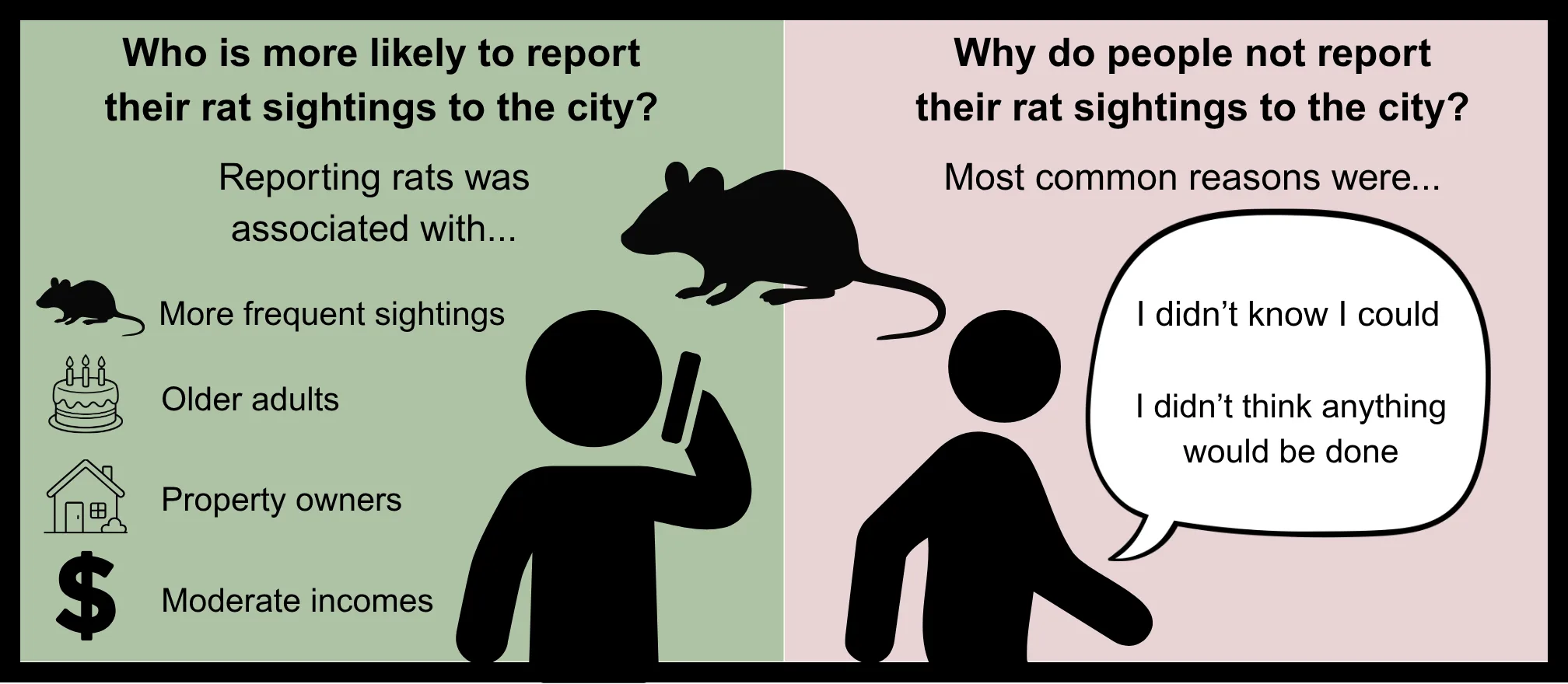
Abstract photo. Graphical summary of survey responses about the characteristics associated with reporting rat sightings and reasons why respondents did not report their rat sightings to the City of Chicago.
Abstract
Public reports of rat (Rattus spp.) sightings are often used to guide municipal rat management. However, to use these metrics to target areas of greater rat-associated risk, it is important to identify any potential sources of bias in reporting behavior. We surveyed residents to understand whether they are more or less likely to report rat sightings based on socio-demographic factors and perceptions of municipal rat management. We mailed surveys to random households in 12 neighborhoods across Chicago, a city with relatively high numbers of rat reports. Of the complete-case respondents (n = 384) who had all observed rats on their block, 38.8% reported their rat sightings. Respondents were significantly more likely to report their rat sightings if they saw rats more frequently, were older, owned rather than rented their home, and had moderate incomes compared to other respondents. Among complete-case respondents who did not report the rats they saw, the two most common reasons were 1) being unaware that they could report rats (43.1%), which was significantly more common for younger respondents, and 2) thinking that nothing would be done in response to their complaint (35.6%), which was significantly more common for respondents who saw rats more frequently. Our results show that many rat sightings go unreported and that rat reporting is not evenly distributed across demographic groups, which, in turn, has implications for quantifying rat distributions using these metrics. Municipal governments could address disproportionate reporting by engaging with younger residents in digital spaces and by advertising actions that will be taken following the report. Increasing the representativeness of rat reports will enable researchers and managers to better estimate trends in rat issues across space and time, identify contributing factors, and address the areas most in need of mitigation in cities worldwide.
Keywords: municipal policy, public health, public reporting data, rodent control, urban rats
Introduction
Urban rats (Rattus spp.) pose diverse risks to public health and infrastructure. Most notably, rats carry zoonotic pathogens that cause diseases in humans, including leptospirosis, hantavirus, and plague (Himsworth et al., 2013, Murray et al., 2024a). Beyond physical health risks, rat infestations can be a mental health stressor on residents (Byers et al., 2019, Murray et al., 2024b). Rats also cause significant infrastructural damage, including chewing through electrical wires (Battersby, 2004). Due to these multifaceted impacts, cities globally have engaged in rat management programs. However, efficient and effective management depends on accurately assessing rat distributions to identify where intervention is most needed.
Many North American municipalities have a free, non-emergency phone number or app for accessing local government information and services (Federal Communications Commission, 2026; Canada 311, 2026; Ciudad de México, 2026). In 1999, Chicago became the first major city in the United States to launch a 311 program (Wiseman, 2025). In Chicago, 311 is used to collect a variety of resident reports pertaining to city services, such as missed garbage collection. Chicago’s 311 system began collecting data on rat complaints on January 1, 2011 (City of Chicago, 2025). Residents can report rodent issues by creating a service request “rodent baiting/rat request” to the Department of Streets and Sanitation by calling 311 or using the 311 website (City of Chicago, 2025). Perhaps in part due to this early use of 311, public engagement with rat reporting is relatively high in Chicago. In fact, Chicago had the most rat complaints of any American city between 2012 and 2024 (Liederman, 2025). This high level of rat reporting makes Chicago an ideal setting for studying engagement with rat reporting systems.
Building on similar models of synthesis work following conference sessions (e.g., Haider et al., 2018, Quartuch et al., 2025), this perspective paper aims to integrate insights from previous work on relevancy, discussions at The Wildlife Society’s (TWS) 2022 Annual Meeting, and our reflections as an authorship team to advance understanding of the concept of “relevancy” in fish and wildlife conservation. To this aim, we explore the meaning of relevance in the context of U.S. fish and wildlife conservation to (1) describe the different ways that relevancy is conceptualized, (2) identify common barriers to advancing relevancy goals, and (3) highlight opportunities for moving relevancy forward to inform research and practice. We hope this perspective inspires change and outlines ways for conservation organizations and agencies to become more relevant and impactful to all constituents in an ever-changing society.
In addition to guiding municipal rat abatement efforts, rat reports serve as data sources for inferences about rat distributions in space and time. For example, rat reports have been found to be higher in urban areas with older or vacant buildings, shorter distances to green spaces, and with higher building density (Tamayo-Uria et al., 2014, Walsh et al., 2014, Sánchez et al., 2021). At a larger scale, a global analysis recently used rat reports and inspections to infer that rat populations are increasing faster in cities experiencing larger temperature increases over time and with denser human populations (Richardson et al., 2025). Given both the practical and theoretical uses of rat complaints to improve city services and advance urban ecology, understanding potential biases in rat reporting is critical to ensuring that these metrics can be considered valid indicators of rat abundance and distribution, as well as changes over time.
The relationship between rat complaints and rat abundance is likely complex and dependent on the spatial scale being examined. In Chicago, the abundance of brown rats (Rattus norvegicus, the only species of rats trapped in the study and more common species in Chicago) is positively associated with the number of rat complaints across neighborhoods (Murray et al., 2018), suggesting that complaints are a useful indicator of rat-prone areas (i.e. with more rats and attractants such as accessible garbage) at coarse scales. However, there may be important differences between individual residents in their propensity to register rat complaints. Individual civic engagement varies based on personal experiences, attitudes, trust in government, and expectations of government responses (Kontokosta and Hong, 2021). Socioeconomics may play an important role in rat reporting patterns because, although low-income areas are disproportionately burdened with rat infestations (Rael et al., 2016), residents with lower incomes are less likely to complain if they do not believe the government will take their complaints seriously (Kontokosta and Hong, 2021) or if they are fearful of interacting with the government (e.g., documented or undocumented immigrants; Kerani and Kwakwa, 2018). Conversely, individuals with lower incomes may be more likely to use free municipal services rather than private pest control compared with more affluent residents. Understanding resident rat reporting behaviors of different sociodemographics can help improve inferences about rat populations at larger spatial scales.
In this study, we examined public engagement with Chicago’s 311 municipal rat reporting program and potential sources of bias in residents’ rat reporting. Little is known about the factors that affect residents’ reporting behaviors and whether disparities in rat sightings exist across neighborhoods. Our goals were to 1) assess how often residents reported the rats they saw on their block or around their residence, 2) identify factors associated with reporting that could bias patterns in rat complaints, and 3) identify barriers to reporting. We hypothesized that residents would be more likely to report rats if they experienced more severe rat issues (i.e. more frequent sightings), had more positive perceptions of municipal rat management, were responsible for rat abatement on their property (i.e., owners rather than renters), and had more negative attitudes towards rats. We also hypothesized that residents with very high incomes would be less likely to report rats to 311 because they would be more likely to use private pest control. For barriers to reporting, we hypothesized that not reporting rats due to low awareness of the program would be associated with seeking information about rats from sources other than municipalities. We also hypothesized that not reporting rats because of low perceived efficacy of municipal rodent control would be more common among individuals experiencing severe rat issues. Understanding biases in rat reporting is critical for understanding the validity of 311 data for rat management prioritization and tracking infestations over time. Identifying reporting barriers can also inform efforts to address gaps and improve municipal reporting.
Methods and Materials
Survey sampling
To better understand biases and barriers in resident rat reporting, we used data from a cross-sectional survey in Chicago, Illinois, USA, conducted to understand Chicago residents’ experiences with rats, perceptions of rats and rodent control, and engagement with different forms of rodent control (Supplemental Material). We surveyed Chicago residents using the methods of Murray et al. (2024b) and (Dyer et al., 2025). Survey invitations (n = 4,750) were mailed from June to August 2021 to randomly selected households across 12 community areas, representing a range of income levels to ensure that residents from diverse socioeconomic contexts were invited to participate (median household income: $29,727 – $138,253; Murray et al., 2024b; Figure 1). Households were selected from a database of buildings, filtered to residential zoning, available through the Chicago Data Portal (City of Chicago, 2025). After the initial mailing, we sent reminder postcards three weeks later. Participants received a $10 incentive after completing the survey, which took approximately 20 – 30 minutes to complete. The survey was available in English, Spanish, and Mandarin and could be accessed online, on paper, or via telephone. The overall goal of the survey was to understand residents’ experiences with rats and rodent control, impacts of rats on health and well-being, and perceptions of rats. Here, we focus on questions pertaining to reporting rat sightings to Chicago’s 311 line. This survey was reviewed and approved by Lincoln Park Zoo’s Institutional Review Board (#IRB-EX-21-001) and Simon Fraser University’s research ethics board (#30003250).
Reporting rats to 311
To understand who was more or less likely to report their rat sightings, we were specifically interested in respondents who had observed rats – and therefore had a reason to report rats – and so we only included respondents who had seen a rat on their block at least once in the past six months. We chose a time period of six months to increase accurate recall and focus on the spring and summer when rat sightings are highest (Murray et al., 2018). The questionnaire assessed how often respondents had reported a rat to 311 in the past six months, on a five-point scale from “never” to “daily or almost daily”. This scale enabled us to test whether the severity of rat issues (i.e., more frequent sightings) was associated with a higher likelihood of reporting rats, and to control for the frequency of rat sightings when assessing the associations between rat reporting and respondent demographics. At the beginning of the survey, we included a visual guide for distinguishing rats vs. mice to increase response accuracy.
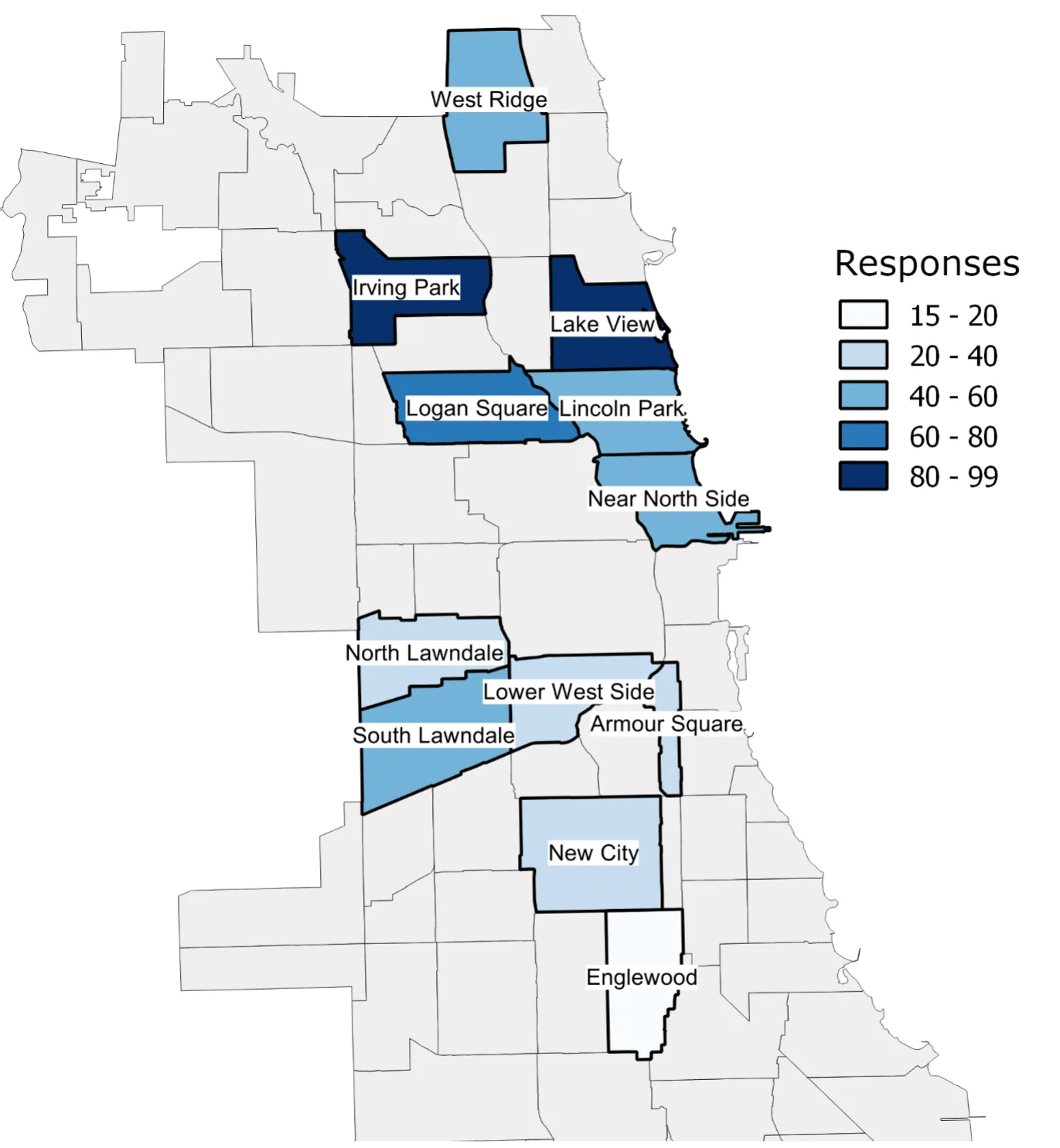
Figure 1. Map showing the 12 community areas in which we mailed survey questionnaires to randomly-selected households. Shading in blue indicates the number of responses we received from each community area.
Correlates of rat reporting
We used survey items assessing whether reporting rat sightings to 311 or any barriers to reporting were associated with a respondent’s identity, housing, mental health, or attitudes toward rats. The questionnaire classified the respondents’ age group and income category to align with the U.S. Census (18-24, 25-34, 35-44, 45-54, 55-64, 65+) and asked about their gender with the following categories: woman, man, non-binary, prefer not to say, and prefer to self-describe. To align income categories from the census with the cost of living in Chicago, we categorized incomes as under $25,000 to align with the poverty line, $25,000 – $75,000 as under the median household income of $75,134 in 2022 (U.S. Census Bureau 2022), $75,000 – $100,000, $100,000 – $150,000, and over $150,000. Residents with higher incomes may elect to hire a pest professional rather than report rats to receive free rat abatement, and so the questionnaire asked whether they had hired a pest professional in the past six months. The questionnaire also assessed whether respondents rented or owned their homes and if they lived in single-family homes, townhouses, or multi-unit buildings. For this analysis, we combined single- family homes and townhouses because they have exterior access.
To account for respondents’ mental well-being, the questionnaire included the 10-item Center for Epidemiological Studies Depression (CES-D) scale, which has been validated across multiple populations; this scale includes items addressing depressed mood, feelings of helplessness and hopelessness, and sleep disturbances, and was used to generate a binary measure of mental distress (Anderson et al., 1994; Zhang et al., 2012). Respondents who scored lower than 10 exhibited low depressive symptoms, while those scoring above 10 were considered to have high depressive symptoms. We previously found that daily rat sightings were associated with high depressive symptoms (Murray et al., 2024b) and included the CES-D scale in this analysis because feelings of helplessness and hopelessness may be negatively associated with taking action to report rats.
The questionnaire also included a series of statements to assess a respondent’s attitudes toward rats and toward municipal rat abatement. Respondents indicated the degree to which they agreed with the statements “I am confident that the city of Chicago can effectively control rats” and “The rat complaints in my neighborhood are taken seriously” on a five-point scale from “strongly disagree” to “strongly agree”. Due to a small sample size in the “strongly agree” category (n = 14 for confidence that the city can control rats, n = 8 for complaints are taken seriously), we pooled “strongly agree” and “agree” and also pooled “strongly disagree” and “disagree”. We used a “rat attitude” scale to measure respondents’ attitudes toward rats developed from qualitative research on rats in Baltimore by German and Latkin (2016). We asked respondents to indicate their agreement with a set of eight statements such as “Seeing rats bothers me” and “Rats are scary” on a five-point scale ranging from “strongly disagree” (1) to “strongly agree” (5) and summed their scores. Respondents’ agreement with these eight statements was summed to determine their scale scores. For positive claims, such as “Rats are smart,” the scores were reversed. The rat attitude scale had good internal consistency (Cronbach’s alpha = 0.80), and scores were overall quite high (median = 36 out of a possible 40); we therefore categorized respondents as having a score above or below the median, with a score above the median indicating highly negative attitudes toward rats.
Barriers to reporting rats
If a respondent had seen a rat but did not report it to 311, we asked them to select any of the following reasons that applied: “I did not know I could report rat complaints”; “I did not know how to report rat complaints”; “I did not have time”; “I forgot”; “The rat was not on my property”; “I was not sure if I should report it”; “I did not think anything would be done in response to my complaint”; “I do not think the city rodent control works to control rats”; and “Other”.
Statistical analysis
We identified factors significantly associated with reporting at least one rat sighting in the past six months (0/1) using logistic regression. We first examined the relationship between reporting rats and the following variables in separate bivariate models: the frequency of rat sightings; age, gender, income, housing type, renter status, and mental distress; confidence in municipal rodent control; perception that their complaints are taken seriously; and attitudes about rats. We then retained all significant variables in a final model. We interpreted significant variables as those with odds ratios that did not include zero. We followed the same approach to identify variables associated with barriers to reporting rats. For analysis, we grouped the following barriers as issues of awareness and gave respondents a 1 if any of these were indicated: “I did not know I could report rat complaints”, “I did not know how to report rat complaints”, and “I was not sure if I should report it”. We grouped the following barriers as perception of municipal rat abatement and gave respondents a 1 if either was indicated: “I did not think anything would be done in response to my complaint” and “I do not think the city rodent control works to control rats”. We considered the barrier “I did not have time” to be a capacity issue. All statistical analyses were conducted in R Studio (version 2022.12.0.353; Rstudio Team 2022).
Results
Survey sample
We received a total of 697 survey responses for a response rate of 14%, which is similar to other surveys mailed to randomly-selected households (Sinclair et al., 2012). Of these, 348 were complete cases (i.e. no missing responses for all variables of interest). Among the 348 complete cases, 38.8% filed a rat report (135 filed a report, while 213 did not) (Table 1). Survey respondents were more likely to identify as white (62.3%), and as women (60.0%), than the Chicago census data (Table S1), and the majority of respondents were property owners of single-family homes (Table 1). We were only able to analyze responses from respondents who identified as women or men due to the small sample size of those who indicated non-binary or self-described (n = 6).
Correlates of rat complaints
Survey respondents were significantly more likely to report their rat sightings if they saw rats more frequently, were in an older age category, had moderate incomes ($75,000 – $150,000), were property owners rather than renters, and had more negative attitudes about rats (Table 2). Perceptions of municipal rodent control, including confidence that municipal rodent control is effective and that their complaints will be taken seriously, were included in the final model but not statistically significant in the final model (Table 2). Other variables, including depressive symptoms from the CES-D scale, were not significantly associated with reporting rats and not included in the final model (Table 1). While we found that respondents with moderate incomes were most likely to report their rat sightings (i.e., a quadratic relationship), the likelihood of a respondent hiring a pest professional increased with income (i.e., a linear relationship; Odds Ratio = 2.07, 95% C.I. = 1.19, 3.65; Figure 2).
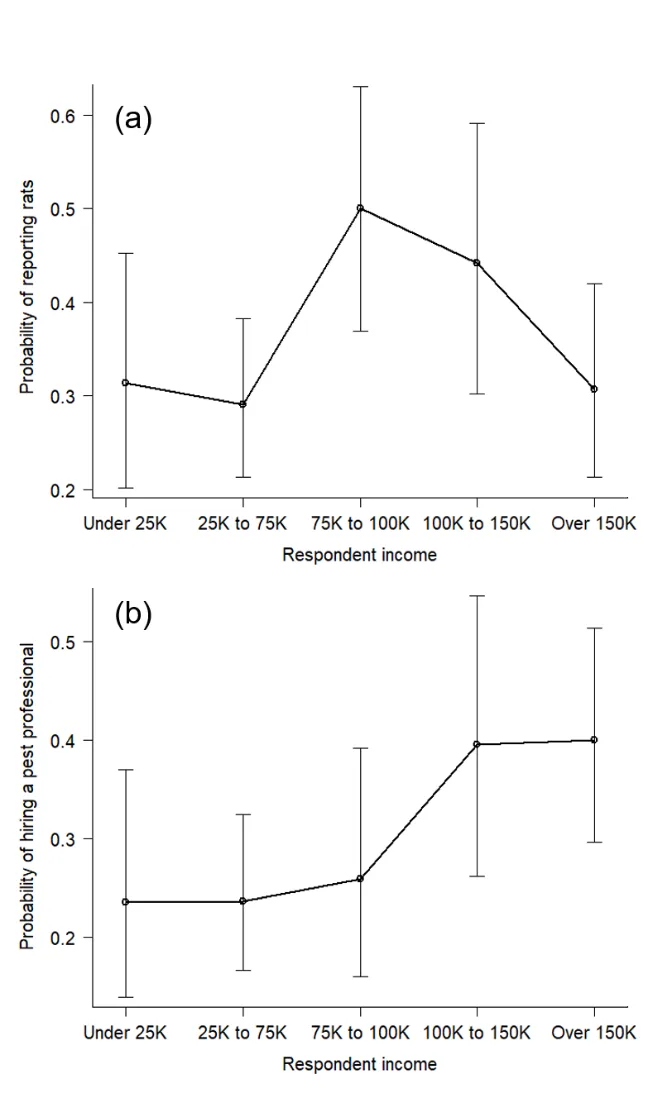
Figure 2. Relationships between income bracket and reporting rat sightings to Chicago’s 311 line a and hiring (a) pest control professional (b). Lines are estimated relationships based on logistic regression and error bars represent 95% confidence intervals.
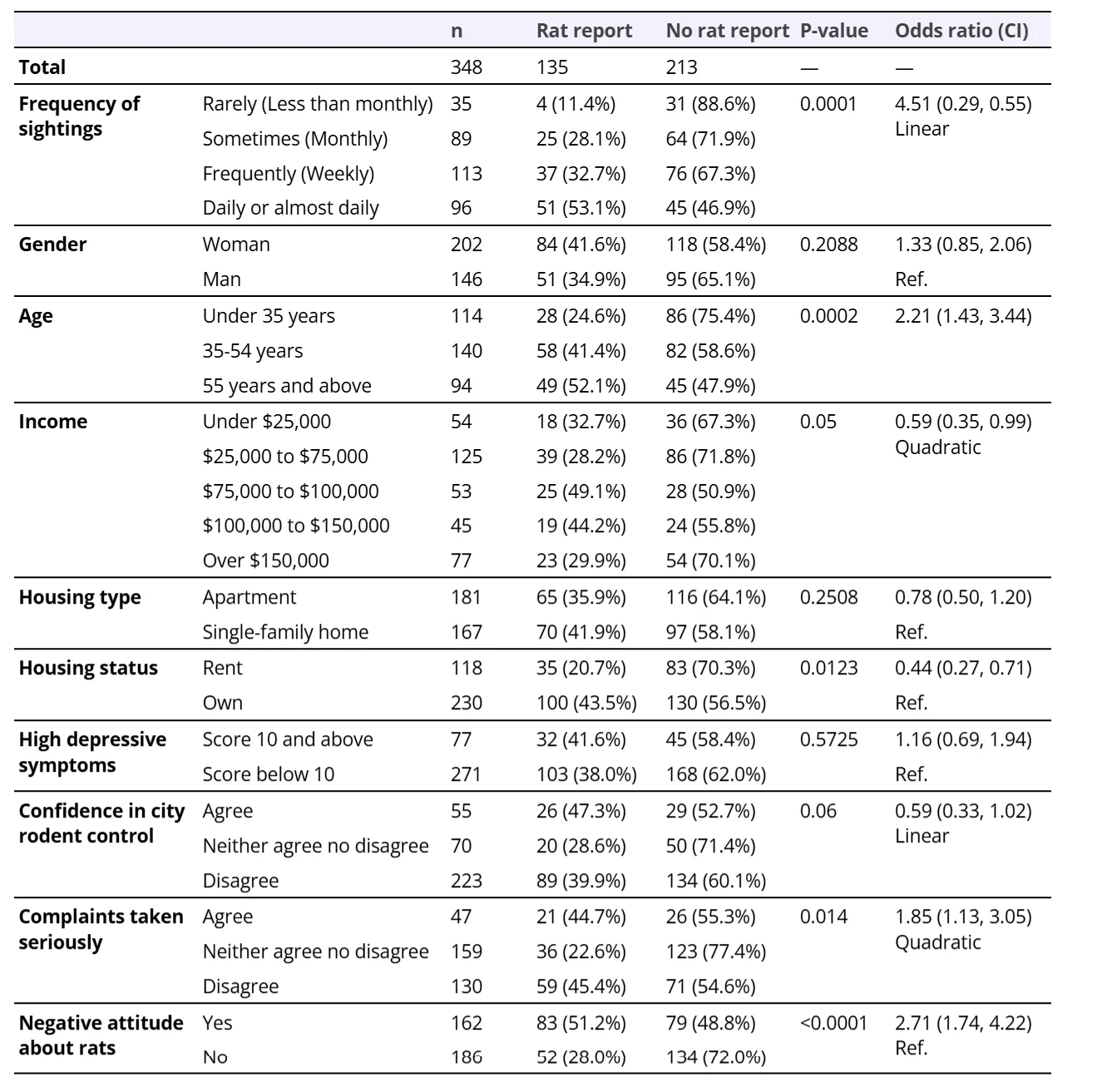
Table 1. Survey respondent characteristics (n = 348 complete cases) from 12 community areas across Chicago in 2021. We assessed significance of bivariate models using odds ratios (OR) and associated 95% confidence intervals (CI) and indicate linear or quadratic relationships for ordinal variables. Reference categories for the statistical analysis are indicated as Ref.
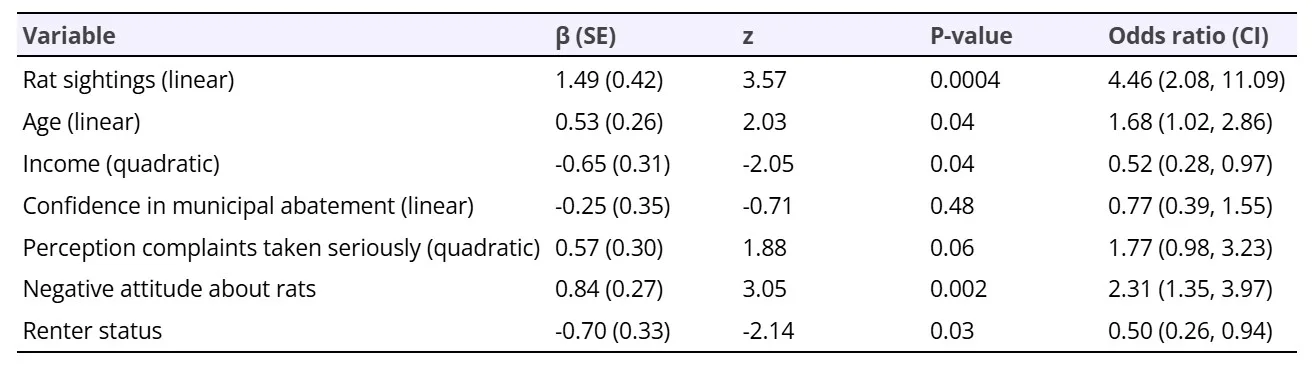
Table 2. Final model of variables associated with reporting rats to Chicago’s 311 line. Parameter estimates (β) with standard errors (SE) are provided along with odds ratios (OR) and associated 95% confidence intervals (CI). Linear vs. quadratic relationships are specified for ordinal variables.
Barriers to reporting
For respondents who did not report their rat sightings (61.2% of complete cases), the most commonly reported barriers were that they were unaware that they could report rat complaints (43.1%) and that they believed nothing would be done in response to their complaint (35.6%) (Figure 3). Respondents were significantly more likely to report awareness-related barriers if they were younger and had not found information about rats from a city website or poster (Table 3). Respondents were significantly more likely to indicate barriers related to their perception of municipal rodent control if they saw rats on their block more frequently (Table 3; Figure 4). None of the variables of interest were significantly associated with a lack of capacity to complain about rats (i.e., not having enough time).
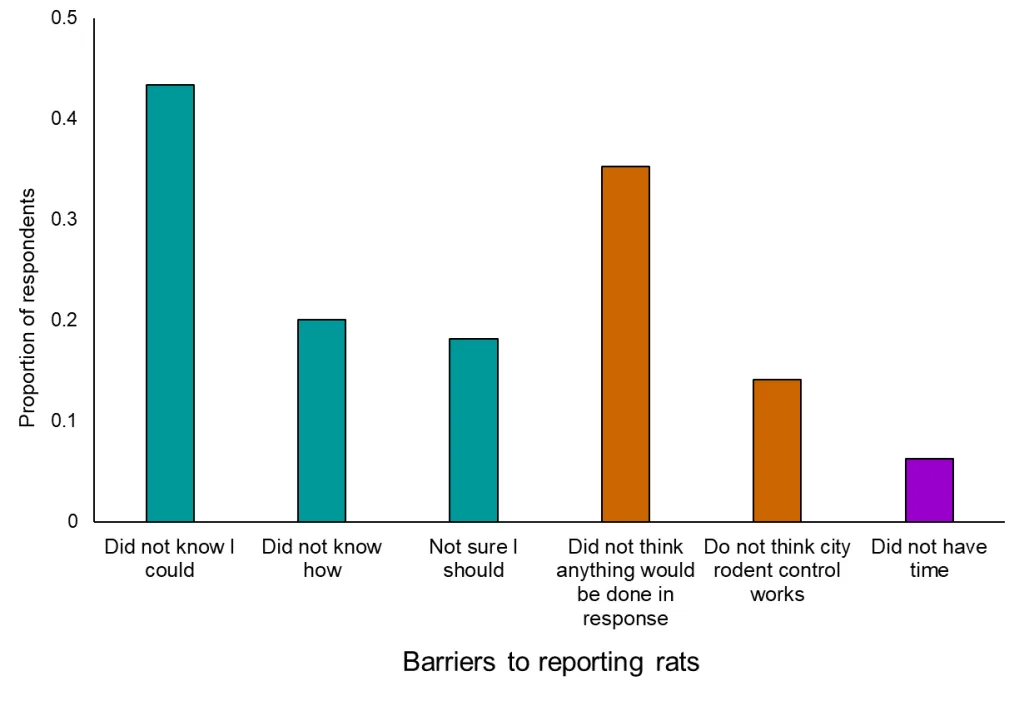
Figure 3. Proportion of survey respondents who had not reported rats they had seen (n = 213) that indicated specific barriers to reporting rats related to awareness (teal; did now know they could, did not know how, if they should), perceptions of municipal rat abatement (orange; think anything would be done, think the program works), or capacity (purple; time to make a complaint).
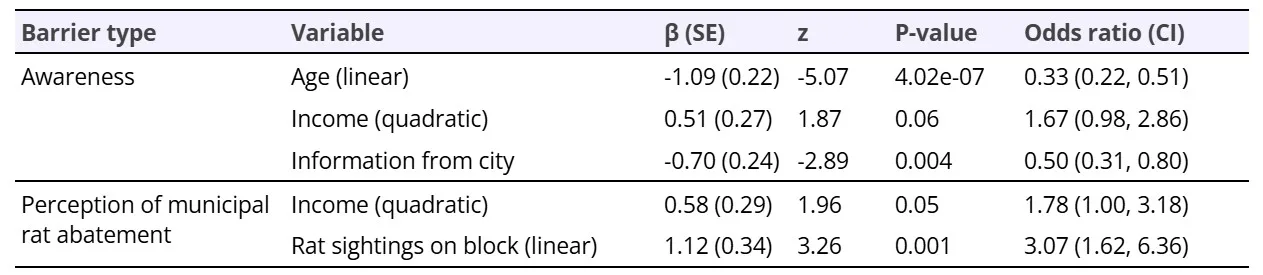
Table 3. Final models with variables associated with barriers to rat reporting associated with awareness (not knowing they could complain, how to complain, whether they should) and perceptions of municipal rat abatement (thinking it works, thinking complaints will be taken seriously).
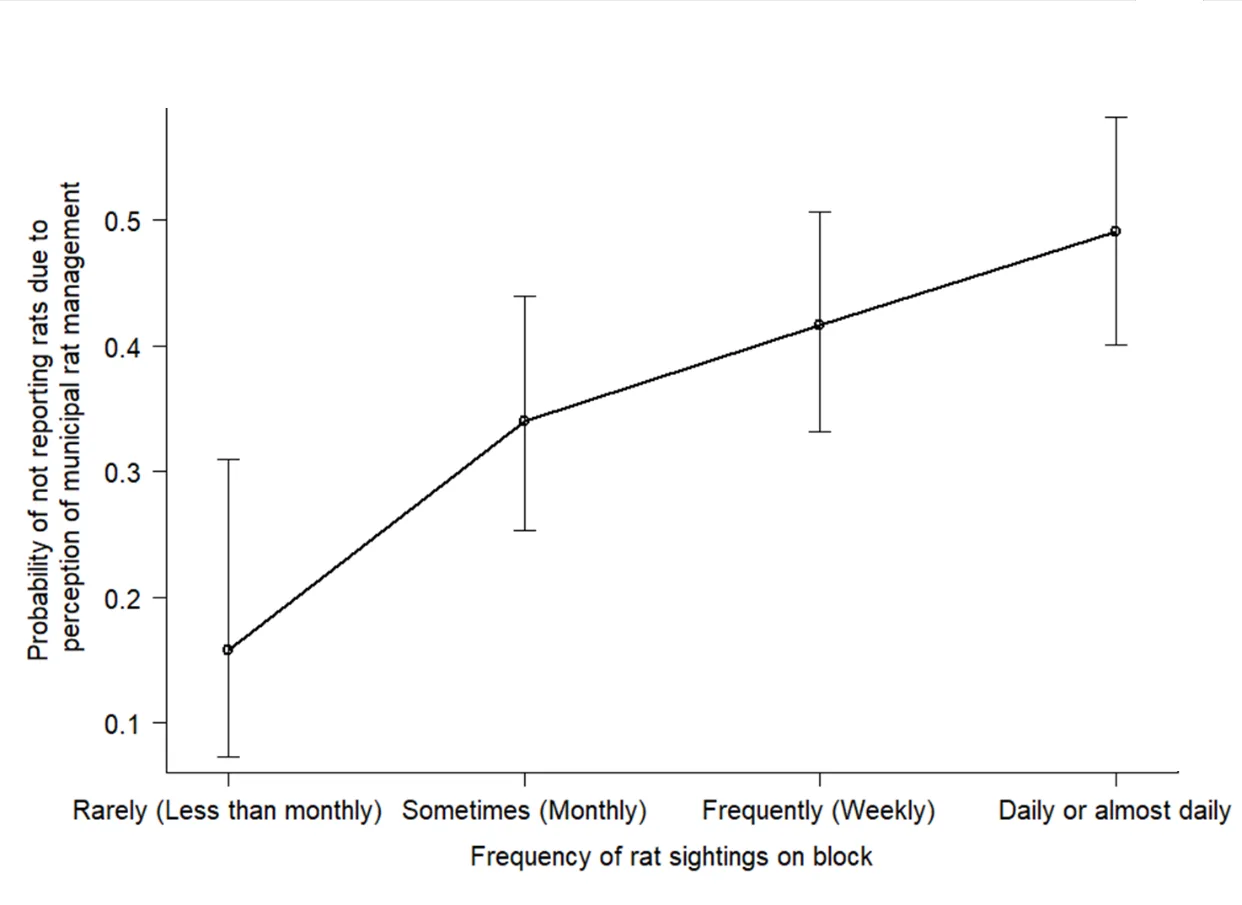
Figure 4. Estimated relationship between a respondent not reporting rat observations due to negative perceptions of municipal rat abatement (i.e. indicated that they do not think city rodent control works or that anything would be done in response to their complaint) and the frequency of rat sightings on their block.
Discussion
In this study, we examined factors associated with reporting rat sightings to a municipal hotline to better understand potential biases in reporting and associated prioritization of areas for rodent control. We found that while most respondents did not report their rat sightings, reporting was more likely among respondents who saw rats more frequently, older residents, homeowners, and those with moderate incomes. We also found that the most common barriers to reporting rats were awareness that they could report rats and the perception that nothing would be done in response to their complaint. These results can help improve inferences based on rodent reports and municipal rat reporting programs.
Given the interrelatedness of these barriers, addressing them is not a singular task but a multifaceted challenge. Treating these barriers collectively, rather than separately, will likely yield more sustainable change at multiple levels—both within and beyond fish and wildlife agencies. Barriers should be viewed not as insurmountable obstacles, but as realities to be anticipated, navigated, and addressed through deliberate strategy, inclusive collaboration, and sustained commitment.
When using rat complaints as an indicator of rat abundance, our results suggest that rats may be underestimated in certain areas due to socioeconomic factors, including housing and income. Renters were half as likely as owners to report their rat sightings, potentially because they are more likely to complain about rats to their landlord than to the city. This may lead to inequitable levels of rat exposure for renters because landlords and building management companies can vary in their responsiveness to pest concerns. Differences in the propensity to complain about rats for renters and owners could also skew distributions in rat complaints if particular neighborhoods or cities are more likely to have a high concentration of renters than others. For example, in Chicago, the owner-occupied housing unit rate is 45.0% compared to 32.8% in New York City (U.S. Census Bureau 2022). In addition to differences in housing, our results suggest that residents with very high or very low incomes are less likely to report rat sightings. This pattern may be because more affluent residents have the resources to hire private pest control professionals rather than relying on public services. To address this gap, policies could require pest control companies to report on spatial and temporal trends in client requests and property inspections. Fewer rat complaints in affluent areas may therefore reflect human behavior more than rat abundance, and this contrasts with the common perception that there are fewer rats in affluent areas (Lee et al., 2024). Conversely, residents with very low incomes may be less likely to complain because income inequality is typically negatively correlated with civic participation (Solt, 2008, Stockemer and Scruggs, 2012). We have previously found that lower-income residents are more likely to see rats in their homes (Murray et al., 2024a); therefore, understanding barriers to rat reporting for under-resourced communities is particularly important for preventing rat-associated disease. Understanding these patterns can help municipal agencies target outreach efforts and interpret trends in rat reports across space and time.
In addition to socioeconomic factors, perceptions of municipal rodent control were important predictors of reporting rat sightings. We found a complex, nearly significant relationship between reporting and the perception that complaints will be taken seriously, with individuals with a neutral opinion least likely to report their rat sightings. Logically, people who think their complaints will be taken seriously are more likely to complain, as that belief is presumably motivating. It is harder to understand why respondents who did not think their complaints would be taken seriously are more likely to complain. It could be related to wanting to voice their frustration or based on whether they had a positive or negative experience with municipal rat management following a previous complaint. Future research could examine residents’ prior experiences with municipal rodent control, expectations about municipal pest control, engagement with programs, and satisfaction with outcomes to understand these dynamics.
To our knowledge, this study is the first to focus on biases and barriers in municipal rat complaints, and as such, it has limitations and offers opportunities for future research. Our survey had a relatively low response rate of 14%, which, while typical for mailed surveys, may have introduced some bias. This bias may have selected for individuals who are engaged with rat issues in Chicago, which makes it all the more striking that the majority did not report their rat sightings. Future studies could enhance representativeness by conducting targeted community engagement in areas with lower survey participation. For example, the majority of our survey responses came from Chicago’s North Side, where residents are disproportionately white and affluent compared to other regions of the city (Smith et al., 2021). Our findings are specific to Chicago, and cities differ in governance, housing conditions, and public health infrastructure. Comparative studies across different cities would help assess the generalizability of these patterns and identify local policies that effectively help residents tackle pest issues. Future studies could also include qualitative data to understand the nuances of why residents decide to report rats (or not) and in which contexts. Despite these limitations, our study contributes to a better understanding of how structural, behavioral, and perceptual factors influence rat reporting.
Our results suggest opportunities to improve public engagement with municipal rat reporting programs. We found a lack of awareness of the 311 rat complaint system to be an important barrier, and younger residents were particularly likely to be unaware that they could report rat complaints. Municipal education and outreach programs could enhance their presence in analog and digital spaces targeted to young adults. For example, social media campaigns have helped increase youth civic engagement (Pang et al., 2022). Public perceptions of municipal programs, particularly their efficacy and responsiveness, were also important factors. Clearly communicating what city actions will and have taken place following a complaint may help assure residents that their complaints will lead to action. For municipalities and researchers that use rat complaints to identify high-risk areas, our results also suggest that while rat complaints may indicate areas with more rats at a coarse scale (Murray et al., 2018), the spatial distribution of resident demographics, housing, and socioeconomics may lead to under-reporting in certain areas. Taking these factors into account when interpreting rat complaint data may help to more accurately identify homes and communities at greater risk of rat infestations, so they can benefit from targeted mitigation. Increasing the representativeness of rat reports will enable researchers and managers to better estimate trends in rat issues across space and time, identify contributing factors, and address the areas most in need of mitigation in cities worldwide.


Acknowledgments
We thank the survey respondents and interview participants for sharing their experiences around a stigmatized topic. We also thank research interns Paige Nussbaumer, Steph Muller, and Deirdre McGovern for assisting with surveys over the phone and ChuiYi Kwan for translating our survey into Mandarin Chinese.
Author Contributions
Caitlyn V. Nguyen: manuscript writing, statistical analysis;
Kaylee A. Byers: conceptualization, survey design, manuscript editing;
Danielle German: conceptualization, survey design, manuscript editing;
Jacqueline Y. Buckley: data collection, manuscript editing;
Seth B. Magle: administrative support, manuscript editing;
Maureen H. Murray: conceptualization, survey design, funding acquisition, manuscript writing, statistical analysis, visualization.
Data Availability
The data included in this analysis can be found here.
Supplementary Information
Supplemental information can be found here.
Transparent Peer Review
Results from the Transparent Peer Review can be found here.
Recommended Citation
Nguyen, C. V., Byers, K. A., German, D., Buckley, J. Y., Magle, S. B., & Murray, M. H. (2026). Biases and barriers in rat reporting: Insights from Chicago’s 311 Data. Stacks Journal: 26011. https://doi.org/10.60102/stacks-26011
Conflicts of Interest
The authors have no conflicts of interest.
Funding Information
This material is based upon work supported by the National Science Foundation under Grant No. 1923882. The funders had no role in study design, data collection and analysis, decision to publish, or preparation of the manuscript. KAB is supported by a Michael Smith Health Research BC Scholar Award (SCH-2023-3130).
Copyright
© 2026 Caitlyn V. Nguyen, Kaylee A. Byers, Danielle German, Jacqueline Y. Buckley, Seth B. Magle, & Maureen H. Murray. This article is open access and distributed under the terms and conditions of the Creative Commons Attribution (CC BY 4.0) license.
References
Alkon, A., S. Nouredini, A.Swartz, A. M. Sutherland, M. Stephens, N. A. Davidson, and R. Rose. 2016. Integrated pest management intervention in child care centers improves knowledge, pest control, and practices. Journal of Pediatric Health Care 30: e27-e41. https://doi.org/10.1016/j.pedhc.2016.07.004.
Andresen, E. M., J. A. Malmgren, W. B. Carter, and D.L. Patrick. 1994. Screening for depression in well older adults: evaluation of a short form of the CES-D. American Journal of Preventive Medicine 10: 77-84. https://doi.org/10.1016/S0749-3797(18)30622-6.
Baker, S. E., S. Maw, P. J. Johnson, and D. W. Macdonald. 2020. Not in my backyard: Public perceptions of wildlife and ‘Pest Control’ in and around UK homes, and local authority ‘Pest Control’. Animals 10: 222. https://doi.org/10.3390/ani10020222.
Battersby, J. E. 2004. Public health policy – can there be an economic imperative? An examination of one such issue. Journal of Environmental Health Research 3: 19-28.
Bennett, G. W., A. D. Gondhalekar, C. Wang, G. Buczkowski, and T. J. Gibb. 2016. Using research and education to implement practical bed bug control programs in multifamily housing. Pest Management Science 72: 8-14. https://doi.org/10.1002/ps.4084.
Bertsou, E. 2019. Rethinking political distrust. European Political Science Review 11: 213-230. https://doi.org/10.1017/S1755773919000080.
Byers, K. A., S. M. Cox, R. Lam, and C. G. Himsworth. 2019. “They’re always there”: resident experiences of living with rats in a disadvantaged urban neighbourhood. BMC Public Health 19: 1-13. https://doi.org/10.1186/s12889-019-7202-6..
Canada 311. 2026. Modern 311 Services for Canadian cities. https://canada311.ca/.
Chicago Office of Inspector General. 2025. Socioeconomic and city data comparison dashboard. Chicago Office of Inspector General. https://igchicago.org/informationportal/data-dashboards/socioeconomic-and-city-data-comparison-dashboard/.
City of Chicago. 2025. 311 service requests – rodent baiting requests. https://www.chicago.gov/city/en/dataset/rodent_baiting.html.
City of Chicago. 2025. Chicago data portal: Chicago building footprints. https://data.cityofchicago.org/Buildings/Chicago-Building-Footprints/ssaf-e4ub.
Ciudad de México. 2026. La guía oficial de los viajeros en la Ciudad de México: Emergencias. https://mexicocity.cdmx.gob.mx/e/emergency/.
Federal Communications Commission. 2026. Nationally Assigned 3-Digit Numbers – N11. https://www.fcc.gov/consumers/guides/nationally-assigned-3-digit-numbers-n11.
Hitlin, P., and N. Shutava. 2022. Trust in government: A close look at public perceptions of the federal government and its employees. Partnership for Public Service. https://ourpublicservice.org/publications/trust-in-government.
Kerani, R. P., and H. A. Kwakwa. 2018. Scaring undocumented immigrants is detrimental to public health. American Journal of Public Health 108: 1165. https://doi.org/10.2105/AJPH.2018.304596.
Kontokosta, C. E., and B. Hong. 2021. Bias in smart city governance: How socio-spatial disparities in 311 complaint behavior impact the fairness of data-driven decisions. Sustainable Cities and Society 64: 102503. https://doi.org/10.1016/j.scs.2020.102503.
Lee, M. J., K. A. Byers, X. Guo, L. K. Lee, S. M. Cox, and C. G. Himsworth. 2024. Urban rats are the ‘fall-guy’: Resident motivations for municipal rat complaints. Plos one 19: e0296920. https://doi.org/10.1371/journal.pone.0296920.
Liederman, M. 2025. Chicago named “Rattiest City in America” for 10th straight year. Block Club Chicago. https://blockclubchicago.org/2024/10/22/chicago-named-rattiest-city-in-america-for-10th-straight-year/.
Marcum, C. S. 2013. Age differences in daily social activities. Research on Aging 35: 612-640. https://doi.org/10.1177/0164027512453468.
McClam, J., A. Wolter, and K. Vu. 2022. An analysis of public disinvestment and a way forward for black youth. Columbia University.
Miller, D. M., J. B. Black, and C. Wang. 2021. Management in multi-unit dwellings and commercial kitchens. in Biology and management of the German cockroach.
Moore, N. Y. 2016. The south side: A portrait of Chicago and American segregation. Macmillan.
Murray, M. H., R. Fyffe., M. Fidino, K. A. Byers, M. J. Ríos, M. P. Mulligan, and S. B. Magle. 2018. Public complaints reflect rat relative abundance across diverse urban neighborhoods. Frontiers in Ecology and Evolution 6: 189. https://doi.org/10.3389/fevo.2018.00189.
Murray, M. H., K. A. Byers, J. Buckley, S. B. Magle, D. Maffei, P. Waite, and D. German. 2021. “I don’t feel safe sitting in my own yard”: Chicago resident experiences with urban rats during a COVID-19 stay-at-home order. BMC Public Health 21: 1-14. https://doi.org/10.1186/s12889-021-11095-y.
Murray, M. H., J. Y. Buckley, K. A. Byers, D. German, N. U. Sancha, S. Mehta, A. Dyer, A. Flores, R. Fyffe, and S. B. Magle. 2024a. Urban rats (Rattus norvegicus) through a One Health lens: Social and ecological factors promote opportunities for urban leptospirosis in rats, dogs, and people. One Health Cases: 68–83. https://doi.org/10.1079/onehealthcases.2024.0001.
Murray, M. H., K. A. Byers, J. Y. Buckley, S. B. Magle, and D. German. 2024b. Associations between rat infestations and mental health vary by gender, race, and income in Chicago. Journal of Urban Health 101: 318–326. https://doi.org/10.1007/s11524-024-00840-4.
Pang, H., K. Qin, and M. Ji. 2022. Can social network sites facilitate civic engagement? Assessing dynamic relationship between social media and civic activities among young people. Online Information Review 46: 79–94. https://doi.org/10.1108/OIR-10-2020-0453.
Rael, R. C., A. C. Peterson, B. M. Ghersi, J. Childs, and M. J. Blum. 2016. Disturbance, reassembly, and disease risk in socioecological systems. EcoHealth 13: 450–455. https://doi.org/10.1007/s10393-016-1157-1.
Richardson, J. L., E. P. McCoy, N. Parlavecchio, R. Szykowny, E. Beech-Brown, J. A. Buijs, J. Y., Buckley, R. M. Corrigan, F. Costa, R. DeLaney, R. Denny, L. Helms, W. Lee, M. H. Murray, C. Riegel, F. N. Souza, J. Ulrich, A. Why, and Y. Kiyokawa. 2025. Increasing rat numbers in cities are linked to climate warming, urbanization, and human population. Science Advances 11: eads6782. https://doi.org/10.1126/sciadv.ads6782.
Rodgers, N. 2022. Chicago family forced to leave West Side home due to rat infestation. FOX 32 Chicago. https://www.fox32chicago.com/news/chicago-family-forced-to-leave-west-side-home-due-to-rat-infestation.
RStudio Team. 2019. RStudio: Integrated Development for R. RStudio, Inc. http://www.rstudio.com/.
Sánchez, C. A., M. J. Rios, M. H. Murray. 2021. Social and environmental correlates of rat complaints in Chicago. Journal of Urban Ecology 7: juab006. https://doi.org/10.1093/jue/juab006.
Schoelitsz, B., P. M. Poortvliet, and W. Takken. 2018. Factors driving public tolerance levels and information‐seeking behaviour concerning insects in the household environment. Pest Management Science 74: 1478–1493. https://doi.org/10.1002/ps.4839.
Smith, J. L., Z. Sonmez, and N. Zettel. 2021. Growing income inequality and socioeconomic segregation in the Chicago region. In Urban socio-economic segregation and income inequality: A global perspective. 349–369. Springer International Publishing. https://doi.org/10.1007/978-3-030-64569-4_18.
Solt, F. 2008. Economic inequality and democratic political engagement. American Journal of Political Science 52: 48–60. https://doi.org/10.1111/j.1540-5907.2007.00298.x.
Stephens, M., K. Hazard, D. Moser, D. Cox, R. Rose, and A. Alkon. 2017. An integrated pest management intervention improves knowledge, pest control, and practices in family childcare homes. International Journal of Environmental Research and Public Health 14: 1299. https://doi.org/10.3390/ijerph14111299.
Stockemer, D., and L. Scruggs. 2012. Income inequality, development and electoral turnout–New evidence on a burgeoning debate. Electoral studies 31: 764–773. https://doi.org/10.1016/j.electstud.2012.06.006.
Sutherland, C., A. J. Greenlee, and D. Schneider. 2020. Socioeconomic drivers of urban pest prevalence. People and Nature 2: 776–783. https://doi.org/10.1002/pan3.10096.
United States Census Bureau. 2022. Quick facts: Chicago city, Illinois. https://www.census.gov/quickfacts/fact/table/chicagocityillinois/SBO030222.
Wang, C., A. Eiden, R. Cooper, C. Zha, and D. Wang. 2019. Effectiveness of building-wide integrated pest management programs for German cockroach and bed bug in a high-rise apartment building. Journal of Integrated Pest Management 10: 33. https://doi.org/10.1093/jipm/pmz031.
Wiseman, J. 2015. Innovations in public service delivery: Issue No. 01: Can 311 call centers improve service delivery? Lessons from New York and Chicago. https://doi.org/10.18235/0006993.
Xie, S., A. L. Hill, C. R. Rehmann, and M. Z. Levy. 2019. Dynamics of bed bug infestations and control under disclosure policies. Proceedings of the National Academy of Sciences 116: 6473–6481. https://doi.org/10.1073/pnas.1814647116.
Zha, C., C. Wang, B. Buckley, Yang, D. Wang, A. L. Eiden, and R. Cooper. 2018. Pest prevalence and evaluation of community-wide integrated pest management for reducing cockroach infestations and indoor insecticide residues. Journal of Economic Entomology 111: 795–802. https://doi.org/10.1093/jee/tox356.
Zhang, W., N. O’Brien, J. I. Forrest, K. A. Salters, T. L. Patterson, J. S. Montaner, R. S. Hogg and V. D. Lima. 2012. Validating a shortened depression scale (10 item CES-D) among HIV-positive people in British Columbia, Canada. PloS One 7: e40793. https://doi.org/10.1371/journal.pone.0040793.