



Relevancy reimagined: Exploring ways to broaden support for fish and wildlife conservation in the United States
2 Human-Environment Systems, Boise State University, Boise, Idaho, USA
3 Department of Parks, Recreation & Tourism Management, North Carolina State University, Raleigh, North Carolina, USA
4 Natural Resource Program Center, National Wildlife Refuge System, U.S. Fish and Wildlife Service, Lafayette, Louisiana, USA
LM: https://orcid.org/0000-0002-0188-427X
HKNM: https://orcid.org/0000-0002-0453-0346
KGG: https://orcid.org/0000-0002-6115-2935
Abstract
As social-ecological changes (e.g., environmental, demographic, and land use change) reshape the context for conservation, fish and wildlife agencies must find ways to expand public support to promote its sustainable future. To better serve a diverse public while adapting to rapidly changing environmental conditions, agencies need to become and remain “relevant” (i.e., meaningfully connected and responsive to the social, ecological, and cultural contexts in which they operate). Tools such as the Relevancy Roadmap highlight barriers and potential solutions to engaging with diverse populations, yet conceptualizing and evaluating relevancy in practice remains challenging. In this paper, we examine the context and meaning of relevancy in conservation, building on discussions from The Wildlife Society’s 2022 Annual Meeting. Further, we offer a framework (Purpose, Process, Products) for reimagining relevancy to chart a path toward agency adoption of more adaptive, inclusive, and relevant conservation efforts. Increasing relevancy of fish and wildlife agencies requires sustained effort and a willingness to reenvision traditional approaches to engaging constituents in ways that better reflect their values, interests, and diverse identities. By committing to this work, agencies can increase the trust, inclusivity, and adaptability necessary to ensure fish and wildlife conservation remains meaningful in a rapidly changing world.
Keywords: agency culture, co-production, fish and wildlife management, human dimensions, public engagement, relevancy
Introduction
The environmental and social context for fish and wildlife conservation in the United States (U.S.) is rapidly changing. In response, fish and wildlife agencies must work to engage broader constituencies and build the social, political, and financial support needed to effectively address complex conservation challenges. Most researchers and practitioners agree that agencies in the U.S. need to become and remain “relevant” (Association of Fish and Wildlife Agencies and The Wildlife Management Institute, 2019, Pomeranz et al., 2021, Quartuch et al., 2025), as state and federal agencies in the U.S. are entrusted with the management of fish and wildlife resources for the benefit of the public (here and throughout termed as “constituents”; Batcheller et al., 2010, Quartuch et al., 2025). This push for relevancy reflects broader shifts, such as the turn toward co-production and participatory science, to address research-practice gaps for complex social-ecological issues including fish and wildlife management and conservation (Lemos et al., 2018, Turnhout et al., 2020, Armatas et al., 2025). Though conceptualizations vary, we define relevancy as the degree to which fish and wildlife management and conservation efforts, research, and institutions are meaningfully connected to, and responsive to, the social, ecological, and cultural contexts in which they operate.
Biodiversity declines, habitat loss and degradation, invasive species, and climate change are creating unprecedented ecological challenges (Tilman et al., 2017). At the same time, shifts in the social and cultural landscape have shaped a human population that is increasingly demographically diverse, urban, and disconnected from nature (Kellert et al., 2017; Manfredo et al., 2020, Pomeranz et al., 2021, Beery et al., 2023). Participation in activities that historically supported fish and wildlife conservation efforts aligned with wise use (e.g., hunting and angling) continue to decline (Roop et al., 2021, Vayer et al., 2021, Duda et al., 2022). Collectively, these trends pose substantial challenges to the sustainability of conservation efforts (Echols et al., 2019, Larson et al., 2021). By increasing the relevancy of conservation across diverse geographic and cultural contexts—and casting a wider web that more effectively integrates perspectives of historically marginalized groups such as urban residents, non-consumptive recreationists, and Indigenous communities—managers will be better prepared to address contemporary challenges (Fisk et al., 2024, Pomeranz et al., 2021).
Building on similar models of synthesis work following conference sessions (e.g., Haider et al., 2018, Quartuch et al., 2025), this perspective paper aims to integrate insights from previous work on relevancy, discussions at The Wildlife Society’s (TWS) 2022 Annual Meeting, and our reflections as an authorship team to advance understanding of the concept of “relevancy” in fish and wildlife conservation. To this aim, we explore the meaning of relevance in the context of U.S. fish and wildlife conservation to (1) describe the different ways that relevancy is conceptualized, (2) identify common barriers to advancing relevancy goals, and (3) highlight opportunities for moving relevancy forward to inform research and practice. We hope this perspective inspires change and outlines ways for conservation organizations and agencies to become more relevant and impactful to all constituents in an ever-changing society.
Setting the stage for the symposium: A brief overview of relevancy in U.S. conservation
In the U.S., growing disconnects between traditional fish and wildlife management approaches and evolving social and cultural values challenge agencies’ ability to become and remain relevant (Manfredo et al., 2020, Pomeranz et al., 2021, Quartuch et al., 2025). Responsibility for managing fish and wildlife rests with state and federal agencies, which manage these resources under the principle that wildlife is held in trust for the public. This principle stems from ideas codified in the public trust doctrine and further articulated through the North American model of wildlife conservation (Batcheller et al., 2010, Quartuch et al., 2025). Although interpretations of the doctrine vary, resulting in differences in management approaches and regulatory frameworks, the underlying premise remains that wildlife in the United States is a public resource entrusted to government agencies to manage for the benefit of all people.
These contemporary tensions are deeply rooted in the historical development of modern fish and wildlife management. During the 1800s, westward expansion of settlers and widespread exploitation of wildlife occurred with little attention to sustainability or indigenous management practices. In response to dramatic population declines driven by overharvest, fish and wildlife agencies began to form in the early 1900s (Manfredo and Teel 2022). These early agencies focused on managing fish and wildlife to maximize sustained yields through a system where hunting and fishing-related license fees and excise taxes funded and shaped most conservation efforts, a user-pay system of conservation governance that remains largely in place today (Organ et al., 2012). Many agencies formed during this period were developed as technocratic organizations, with expert staff making management decisions for a largely unengaged public (Quartuch et al., 2025). This framework established differences in power that limited consideration of the impacts of management decisions on the full range of constituents they served (Sullivan et al., 2022).
Compounding these challenges, historical conservation policies and societal practices shaped by systemic racism and exclusion continue to affect the ways in which people interact with fish, wildlife, and outdoor spaces (Rudd et al., 2021, Mullenbach et al., 2022). These histories include the forced displacement of Indigenous peoples from ancestral lands, the exclusion of Black Americans and other communities of color from outdoor recreation through segregation and discriminatory land use policies, and the ongoing marginalization of low-income and disabled communities in conservation planning (Dietsch et al., 2021). As a result, agencies often perpetuate institutionalized biases—intentionally or not—by centering preferences for specific types of interactions with fish and wildlife, such as hunting, angling, and wilderness-based recreation, while overlooking other cultural, spiritual, subsistence, or urban-nature relationships (Mullenbach et al., 2022). These patterns and practices contribute to a lack of trust, uneven access to resources, and underrepresentation of diverse perspectives in decision-making and leadership in conservation (Dietsch et al., 2021). Relevancy efforts often focus on addressing these patterns but ignore why conservation might be deemed “irrelevant” in the first place. Irrelevancy is not simply the opposite or absence of relevancy; rather, it is an important decision point where a person or group determines a topic does not align with their needs, values, or priorities (Strassheim 2018). Irrelevancy is largely unexplored in conservation-related literature and highlights a missed opportunity to understand how conservation agencies may be further distancing themselves and their missions from historically marginalized constituents.
Today, U.S. fish and wildlife management agencies face new challenges from increased pluralism and polarization, which has created a more complex landscape for policy making (Casola et al., 2022, Manfredo and Teel 2022). These challenges are exacerbated by global environmental changes, rapid urbanization and a growing disconnect from nature for most Americans, reflecting broader declines in connections to nature around the world (Beery et al., 2023). Moreover, the user-pay funding model for fish and wildlife conservation still permeates most agencies, despite declines in the numbers of hunters and anglers across the country. As this participation changes and new audiences (e.g., wildlife viewers) emerge, agencies are frequently tasked to “do more with less” while managing wildlife for an increasingly diverse public (Jacobson et al., 2007, U.S. Fish and Wildlife Service 2023). Importantly, we use the term “audience” here and throughout our discussion of the relevancy symposium in reference to engagement efforts both within and outside of agencies, encouraging agencies to move beyond specific geographic jurisdictions in determining who should be engaged, consistent with our expanded view of constituents. Agencies need to understand diverse constituencies and their shifting interests in and connection to fish and wildlife. Failure to maintain relevance directly undercuts the philosophy of managing wildlife for all.
Recognizing these challenges, the Association for Fish and Wildlife Agencies (AFWA) convened the Blue Ribbon Panel on Sustaining America’s Diverse Fish and Wildlife Resources in 2015 to assess the state of fish and wildlife conservation and develop recommendations for the future. The Panel’s two main suggestions focused on (1) establishing a dedicated federal funding source for fish and wildlife conservation, and (2) understanding “impact of societal changes on the relevancy of fish and wildlife conservation and recommendations on how agencies and their programs might transform to engage and serve broader constituencies” (AFWA & WMI 2019). The emphasis on relevancy fueled development of AFWA’s Relevancy Roadmap, released in 2019 (AFWA & WMI 2019). The Relevancy Roadmap, proposed as a tool to help agencies chart a course for engaging and serving broader constituencies, focuses on cultural and capacity-related barriers to relevancy both within agencies and among constituents, as well as political and legal constraints. Although the Roadmap has been widely distributed, adoption remains slow. Below, to help advance the research and practice of relevancy, we explore various ways in which relevancy is conceptualized in fish and wildlife conservation and offer potential solutions for meaningfully addressing engagement challenges for both established and underrepresented audiences.
Lessons learned at relevancy symposium
During TWS’s 2022 Annual Meeting in Spokane, Washington, U.S., the Human Dimensions, Native People’s Wildlife Management, and Urban Wildlife Working Groups co-sponsored a symposium to explore how social science can be used to assess relevance. Through a series of eleven talks and two attendee polls, the symposium highlighted ways agencies can define processes and outcomes when it comes to being responsive to the diversifying contexts in which fish and wildlife conservation are situated. We first summarize the presenters’ conceptualization of relevancy in their talks. We then describe emergent themes from the attendee polls and subsequent discussions to summarize attendees’ understanding of relevancy. We conclude this perspective by presenting and discussing a framework to serve as a path forward, synthesizing insights from the symposium, literature, and discussions as an author team.
How presenters conceptualized relevancy
Broadening engagement and inclusion in conservation
Several presentations centered on strategies to expand public participation, foster greater diversity in who participates, and promote equitable governance within conservation. These speakers provided a foundational framework for broadening conservation’s reach, identifying pathways to connect with new and existing audiences. Undesired outcomes, such as social conflict, eroding support for conservation, and inequitable and unsustainable funding, may be rooted in a lack of agency relevancy. This underscores a central challenge in the conceptualization of relevancy: overlooking or misunderstanding the contexts in which conservation is embedded, which may include a disconnection from the people agencies are entrusted to serve. These notions were refined through a discussion of the specific mechanisms that enable diverse voices and perspectives to be genuinely incorporated into wildlife management decisions (e.g., expanding customer-based approaches to satisfaction that integrate broader public interests), supporting increased legitimacy and buy-in from constituents. Emphasis was placed on situating relevancy within its societal context by directly acknowledging historical and ongoing systemic barriers to true inclusion (e.g., inequitable access to public spaces and lands), necessitating solutions that are mindful of these forces and how they shape conservation policy. Recognitional justice, which calls for acknowledgement and validation of diverse worldviews, perspectives, and cultures, was described as a key component of relevancy through a presentation on work centering the indispensable and historically underrepresented value of Indigenous knowledge and cultural ties to the land and species in management decisions. An additional example highlighted the history and creation of an urban National Wildlife Refuge, wherein community action (leveraging inclusive engagement) led to the protection of a cherished urban greenspace. Continued community-led engagement has further shaped the Refuge’s mission to connect urban residents with fish and wildlife conservation and shaped its programming and recreational opportunities. Importantly, these examples on broadening engagement and inclusion in conservation do not suggest disconnecting from those traditionally served, but rather call for greater attention to needs and perspectives previously unmet or overlooked.
Understanding social dynamics
Related to the symposium’s focus on cultural and social relevance, speakers also explored the complex interplay of public perceptions, evolving societal values, and the critical role of trust in influencing conservation outcomes. For example, the presence or absence of public trust can either enable or severely hinder the success of natural resource policies and collaborative conservation efforts, emphasizing the vulnerability of public relationships with agencies and demonstrating how trust serves as the bedrock for all community-agency interactions. Trust-as-confidence (i.e., capability or “calculative trust”) and trust-as-salient-values-similarity (i.e., intention or “relational trust”) were further identified as levers for building relevancy. Additionally, attunement to evolving public sentiment, values, and priorities is necessary when designing adaptive management approaches and maintaining the relevancy of an agency to those they serve. By adeptly navigating these social dynamics—maintaining trust and resonance with values—agencies can sustain public acceptance of their actions and decision-making authority. This theme builds on the need for deepened engagement, calling for agencies and practitioners to not only define who they serve more intentionally, but also recognize the broader suite of values and perspectives that result from this intentional inclusion.
Applied relevancy and practical approaches
Shifting away from conceptualizations of relevance toward concrete implementation, insights were shared from projects addressing real-world challenges in diverse conservation settings. One such project focused on a complex urban challenge that necessitated integrated solutions. Agencies working to address urban rat management for public health purposes identified trust as a barrier to public complaint reporting, highlighting opportunities to improve communication efforts, identify high-risk communities, and address residents’ concerns and needs. A second example came from collaborative, multistate efforts to operationalize relevancy, highlighting the practical lessons learned in identifying common ground and developing actionable strategies across various contexts and detailing the structured phases of engagement used to achieve desired outcomes. These phases include: (1) Building the Foundation—understanding context and setting initial goals; (2) Information Gathering—deepening insight into community priorities and barriers; and (3) Actions to Achieve Relevancy Goals—translating findings into actionable engagement strategies with evaluation criteria. Thus, to achieve relevance on the ground, agencies should begin with a human-focus and adopt practices that sustain and support effective ecological conservation.
How attendees conceptualized relevancy
Nearly 100 people attended the symposium (hereafter referred to as “attendees”) and responded to questions in digital polls that explored their perspectives about relevancy. Open-ended responses were thematically analyzed using an inductive coding approach. Thematic outcomes regarding attendee perspectives on relevancy importance, meaning, and assessment are discussed below.
The majority of attendees identified as natural or social scientists currently working at an academic institution, followed by students, land managers, and employees at non-profit organizations and federal or state agencies. Attendees were asked to consider the importance of different forms of relevancy within their organization through an initial poll (Table 1). Ecological relevancy, or whether conservation efforts are focused on appropriate species or habitats, ranked as most important. Closely following was social relevancy, or whether different perspectives and values are represented in the work. Demographic relevancy (representation of diverse populations) and financial relevancy (funding mechanisms are viable and sustainable) were rated as less important. Though not surprising given the background of professionals at the conference, these results illuminate disparities in the types of relevancy organizations are typically prioritizing.
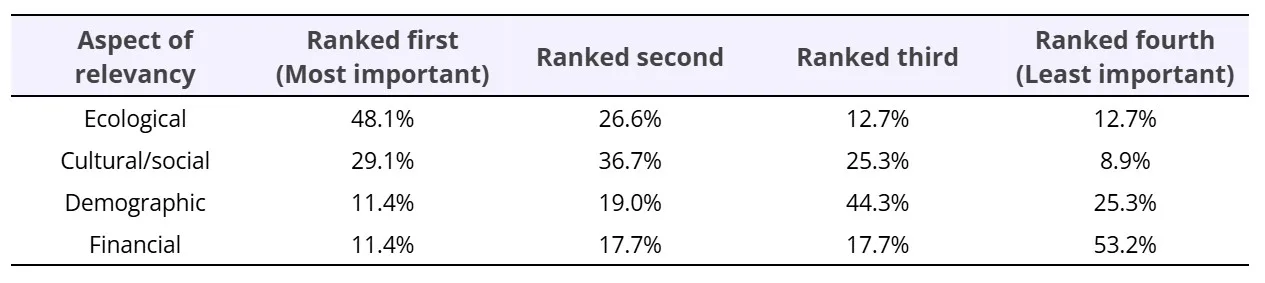
Table 1. Percent of attendees ranking the importance of four common aspects of relevancy to their organization (n = 79 responses). Attendees were asked to rank the following aspects of relevancy: (1) ecological (focus on appropriate species or habitats), (2) cultural/ social (representation of different perspectives and values), (3) demographic (representation of diverse populations), and (4) financial (funding mechanisms are viable and sustainable).
Exploring attendees’ beliefs about the meaning of relevancy in fish and wildlife conservation revealed interesting patterns (Table 2). Some responses focused on gaining widespread support for conservation efforts through audience engagement. Some focused on diverse, marginalized, or novel audiences, while others stated all audiences should be engaged. Other attendees acknowledged that engagement methods were audience-dependent.
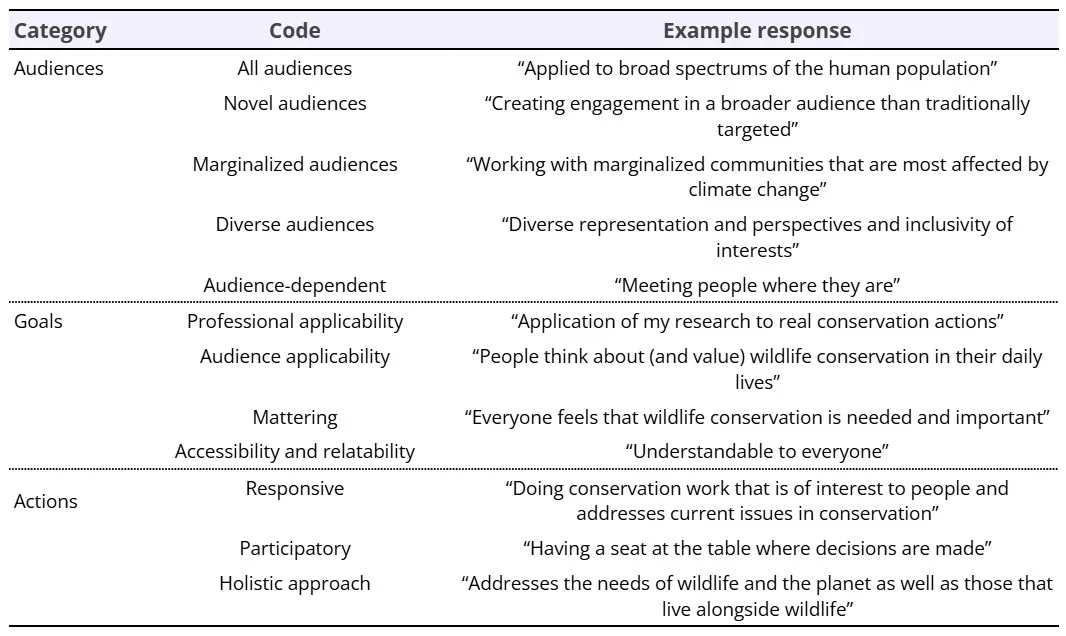
Table 2. Example quotations from attendee response to poll question 'What does relevancy mean to you?' Thematic analysis of responses resulted in three broad categories (Audiences, Goals, and Actions) with specific codes within each category.
There were just as many responses, however, that veered away from the topic of audience engagement when considering the meaning of relevancy—instead focusing on goals and actions. Several responses brought in aspects of the conservation profession being accessible, relatable, and applicable regardless of audience. An important construct of “mattering” emerged, grounded in the ever-evolving study of values and connection to place and succinctly defined by Prilleltensky (2020, p. 16) as “the experience that you are valued and that you can add value.” Additionally, some responses explored what successful relevancy looks like, acknowledging its holistic nature through ecological representation, responsiveness to current social and ecological needs (e.g., addressing climate and biodiversity crises), and engagement of diverse viewpoints and voices.
Considering current limitations of audience engagement related to capacity, funding, and political will, agencies may be better served to focus attention on how relevancy leads to impactful solutions, where indicators of “impact” are defined and measured in partnership with an engaged audience. As shown in Figure 1, the concept of relevancy not only refers to the audiences engaged but also considers the goals and actions of those efforts, such as enhancing the accessibility and relatability of issues, fostering a sense that conservation “matters” in people’s lives, and alignment of professional expertise with constituent needs and values. Successful relevancy includes participatory methods to understand public values, is responsive to the values heard, and leans into issues beyond traditional focus areas. According to our symposium attendees, relevancy refers to not only who is engaged, but in what manner and for what purpose.
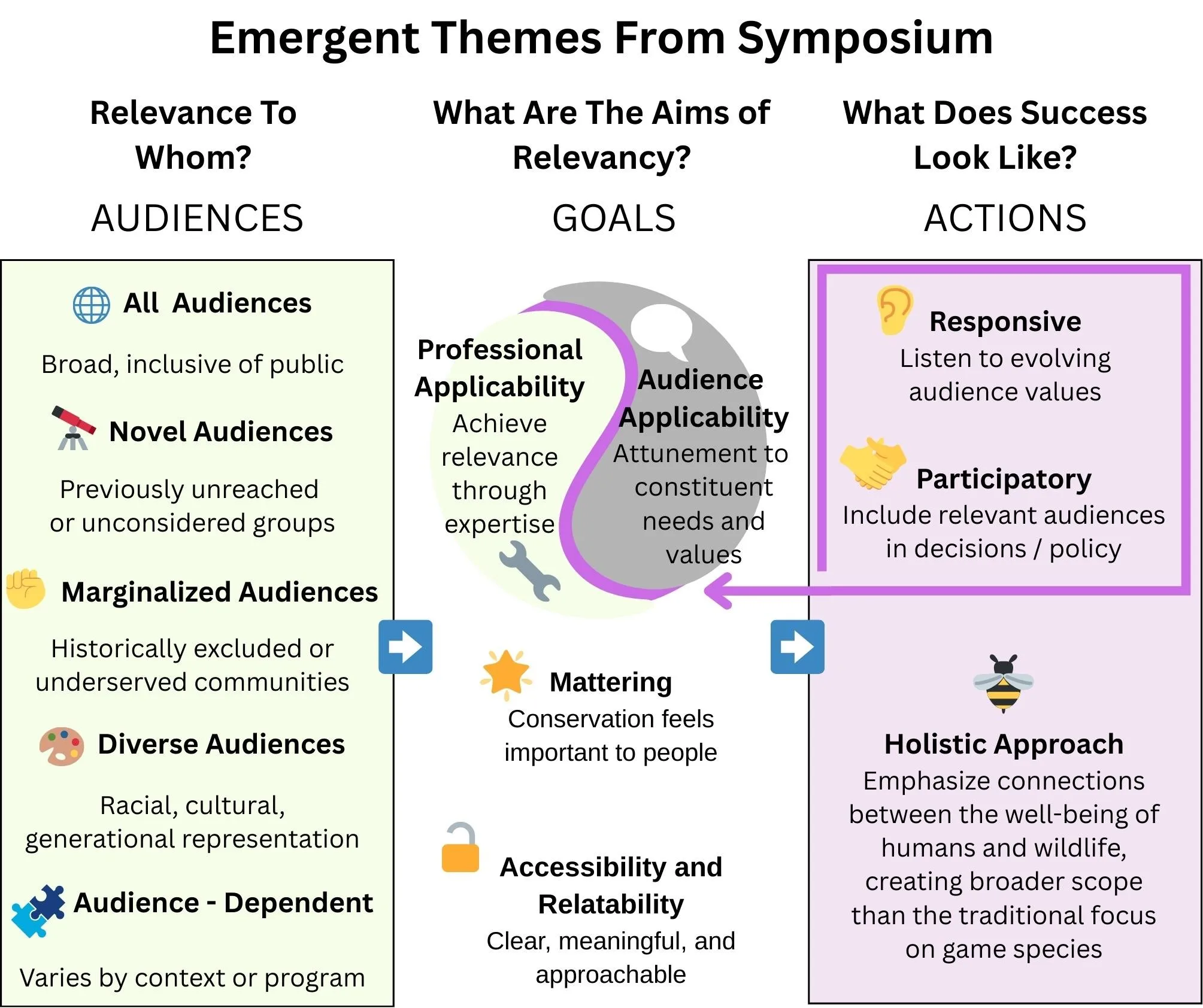
Figure 1. Emergent themes of relevance in fish and wildlife conservation identified through thematic analysis of attendee responses during a 2022 TWS symposium. Attendees were asked what “relevance” means in the context of fish and wildlife conservation. Responses were categorized into three domains: Audiences (to whom conservation is relevant), Goals (what relevance aims to achieve), and Actions (indicators of success). Subthemes are illustrated in each domain. The feedback loop highlights the role of agency responsiveness and participatory decision-making in aligning professional expertise with evolving audience needs.
During the remaining half of the symposium, we focused the questions from a second attendee poll on strategies to measure and assess relevancy. The majority of attendee respondents were not sure of whether their organization measured relevancy. Of those who did measure relevancy, common methods included gathering survey-based feedback about programming as well as quantitative data regarding attendance and participation. Respondents often recognized the need for more diverse mechanisms for assessing relevancy across the profession. When asked why relevancy assessment was lacking, attendees described barriers related to capacity and uncertainty about appropriate metrics. In discussions about what is needed to make progress in this regard, several ideas were mentioned including sharing best practices, especially those demonstrating cross-cultural fish and wildlife concerns and interdisciplinary impacts of work. We identified the conceptual understanding of relevancy and practical gaps in assessing it, emphasizing the need to share improved frameworks and indicators with conservation professionals (as represented by the symposium attendees).
Barriers to relevancy
As the symposium themes and broader literature reveal, achieving relevancy is an ongoing practice. To continue to move relevancy forward, it is essential to understand and anticipate barriers. The Relevancy Roadmap laid out five broad categories of barriers (i.e., agency culture, agency capacity, constituent culture, constituent capacity, and legal and political constraints) to increasing relevancy (AFWA & WMI 2019), many of which were echoed by our symposium speakers and attendees. Agency and constituent cultures shape how conservation is understood and valued. Cultural mismatch between agency staff and the constituents they serve can lead to goal misalignment, lack of trust, and resistance to change (Quigley 2016, Hare et al., 2017, Jacobson et al., 2022). Agencies must have the capacity to recruit and retain diverse staff who can serve a broad constituency, develop and maintain community partnerships, and provide accurate, scientifically sound information to the public (Jacobson et al., 2022). Agency capacity barriers involve a lack of disciplinary expertise (e.g., social science expertise) and a lack in training (regardless of disciplinary background) to help staff engage constituents in productive, meaningful, and equitable ways (Quartuch et al., 2025). On the constituent side, the capacity to engage with fish and wildlife conservation can be limited by real or perceived barriers such as limited access, cultural norms, and economic constraints. Decision processes that lack transparency and are perceived to be inequitable can also erode trust and discourage engagement (Riley et al., 2018), making certain constituents feel their opinions are not valued. Additionally, the legal and political processes that influence who or what receives funding and resources may be controlled by a narrow set of constituencies, and often lack the support of high-level agency or political leaders needed to prioritize and institutionalize relevancy efforts. In increasingly polarized political climates, relevancy can also become conflated with political flashpoints. For example, contentious issues such as “wokeness” have generated a backlash against the concepts of diversity, equity, and inclusion that are central to relevancy (Prasad and Śliwa 2024). Relevancy and processes that support it, such as co-production, rely on creating spaces where everyone matters, and politicized rhetoric and priorities often complicate those efforts (Prilleltensky 2020, Turnhout et al., 2020).
Given the interrelatedness of these barriers, addressing them is not a singular task but a multifaceted challenge. Treating these barriers collectively, rather than separately, will likely yield more sustainable change at multiple levels—both within and beyond fish and wildlife agencies. Barriers should be viewed not as insurmountable obstacles, but as realities to be anticipated, navigated, and addressed through deliberate strategy, inclusive collaboration, and sustained commitment.
In light of these identified barriers and the insights from our symposium, the remainder of this perspective builds on these ideas and the broader literature to offer a glimpse of what relevance might resemble in the contemporary conservation landscape.
Relevancy reimagined
Becoming and remaining relevant in a fast-changing world requires fish and wildlife agencies to critically examine how they define problems, produce knowledge, and engage with the communities they serve. The thematic takeaways of both symposium presenters and attendees emphasize the need to consider and respond to societal values embedded in science, institutions, and species, as well as the socio-political contexts within which fish and wildlife science and management occurs (Hare et al., 2017, King and Tadaki 2018, Pomeranz et al., 2021). Without such attention, misalignment (lack of relevancy) or even irrelevance may result, leading to undesired outcomes (e.g., eroding support for conservation). This further calls for relevancy to be grounded in inclusive, reflexive processes that consider power dynamics and the positionality of conservation practitioners (Turnhout et al., 2020, Vilchez Zuñiga and Mohammed 2025). As conservation professionals and scholars, our identities influence our relationships with the communities we work with and serve, as well as the decisions we make (King and Tadaki 2018, Vilchez Zuñiga and Mohammed 2025). Acknowledging and understanding this influence gives rise to intentional, responsive practices. Altogether, these considerations to values, context, and power support stronger relationships between agencies and the constituents they serve, which has been similarly emphasized in the broader scholarship related to participatory research and co-production (e.g., Wamsler, 2017, Eaton et al., 2022, Armatas et al., 2025).
With these calls in mind, we propose a framework for reimagining relevancy to advance fish and wildlife conservation in a changing world structured around three core components: Purpose, Process, and Products (Figure 2). This framework offers a foundation to help move fish and wildlife management and conservation toward a more equitable, legitimate, and socially responsive future.
Purpose is the goal of a project or management practice, which should be intentionally aligned with the needs of the communities being served (Figure 1 “Audiences”; Figure 2 “Purpose”). As the Relevancy Roadmap and other recent initiatives have recognized, fish and wildlife conservation and management must evolve to reflect the needs, priorities, and identities of a diversifying public, many of whom have been historically excluded from or underserved by traditional models of fish and wildlife governance (AFWA & WMI 2019, Pomeranz et al., 2021). The presentations on broadening engagement, inclusion of diversity of perspectives, and ensuring equitable governance further emphasize this critical purpose: to create conservation efforts that genuinely reflect and serve the diverse values and needs of an ever-changing society. This change requires an intention to move beyond traditional approaches and address historical inequities, as evidenced in the talks about recognitional justice and the value of Indigenous knowledge. Such a purpose necessitates grounding relevancy work in goals (i.e., intention) that are continuously co-produced with the affected communities (Hare et al., 2017, Cooke et al., 2021, Davenport et al., 2025).
Process describes the mechanisms through which the purpose is realized. The symposium presentations detailed strategies ranging from using broader frameworks to engage with new audiences to incorporating diverse voices into decision making and navigating the complex social dynamics of trust and wildlife value orientations. All of the speaker examples emphasized the importance of inclusive, adaptive, and iterative engagement efforts informed by the social sciences, reflective of a broader shift toward co-production for actionable science (e.g., Lemos et al., 2018, Cooke et al., 2021, Armatas et al., 2025). For example, co-production has been applied within a fisheries management context to improve understanding of fish population dynamics, migration behavior, and mortality risk of non-target species via collaboration with community members throughout the design and implementation of the research process (Cooke et al., 2021). Adopting a view that social and ecological components are interdependent and shaped by complex and dynamic processes reframes conservation challenges as dynamic and interconnected rather than static or siloed (Hertz et al., 2020, Mancilla García et al., 2020).
Acknowledgment of the interconnectedness of people, wildlife, and place supports the co-production of knowledge and management outcomes that are ecologically meaningful and socially acceptable. Co-production enables practitioners to reveal, acknowledge, and respond to both locally relevant issues (e.g., health equity) and large-scale conservation challenges (e.g., land use change, climate and biodiversity crises). Co-production further calls for agencies to value diverse forms of expertise, including those rooted in place-based and traditional ecological knowledge (Cooke et al., 2021, Davenport et al., 2025). Importantly, a focus on process necessitates attention to iteration and context, revealing multiple approaches to promoting relevancy both as an ideal and a practice (for analogous arguments in the co-production literature, see Lemos et al., 2018, Cooke et al., 2021, Armatas et al., 2025).
Products are the outcomes that emerge from the alignment of a co-produced purpose and process. The symposium presentations provided two notable examples of aligned products. In the case of urban rat management, a human-focused approach leveraging social science allowed for the identification of high-risk communities based on their exposure to rats and vulnerability (i.e., capacity to control rats, including considerations to socioeconomic status) and revealed opportunities for improved communication and engagement (e.g., addressing misunderstandings or concerns about management actions, ensuring community members feel heard). A second example of an aligned product comes from the structured engagement process developed through multistate efforts to identify and achieve relevancy goals (i.e., Building the Foundation, Information Gathering, and Actions to Achieve Relevancy Goals). Such a process should be further tailored to local issues and contexts (Hare et al., 2017, Berl et al., 2022). These products reflect not only tangible outputs but the deeper value of engagement as a means of transformation, and other intangible benefits related to strengthened relationships and trust have been noted for well-designed co-production and participatory processes (Cooke et al., 2021, Davenport et al., 2025).
Our symposium and the broader literature collectively point to the need for transformative change in fish and wildlife agency culture and opportunities to leverage social science to better align the purpose, process, and products of engagement (e.g., Berl et al., 2022, Jacobson et al., 2022). Such internal transformational work requires agencies to prioritize public trust thinking and good governance principles (Hare et al., 2017, Pomeranz et al., 2021, Pauley et al., 2022). This includes valuing quality over quantity of engagement (to facilitate trust-building and social learning) and committing to co-production with constituents at all stages. In order to implement such transformative changes, a multi-level approach involving both agency leadership and staff will be required. Ultimately, relevancy emerges when a clear, inclusive, co-developed purpose guides a thoughtful, adaptive process, resulting in conservation products (e.g., policies, programs) that resonate with and benefit the communities they serve. Alignment across purpose, process, and products is essential to advancing a more just, relevant, and resilient future for fish and wildlife conservation.
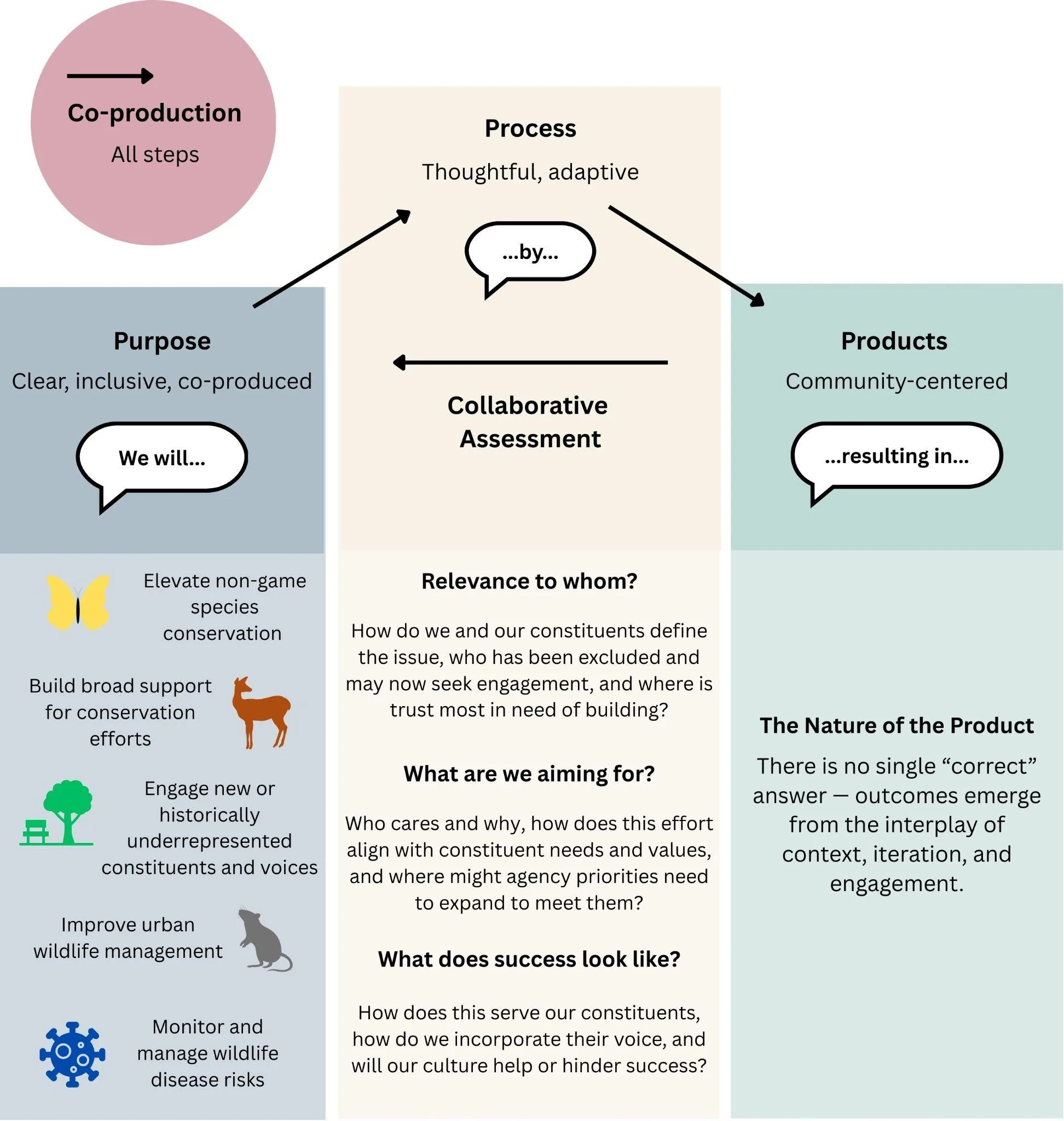
Figure 2. The purpose-process-products framework for reimagining agency relevancy. Co-production and collaborative assessment provide reflexive feedback between steps, making the process iterative and context dependent. Examples of co-produced purpose (context and audience dependent; these examples were inspired by the symposium session talks) and guiding questions for the co-production of process are provided. Outcomes (products) emerge from the alignment of agency purpose, adaptive processes, and community needs.
A path to reimagining relevancy
To effectively reimagine relevancy in the rapidly changing landscape of fish and wildlife management, it is critical to elevate best practices for how fish and wildlife agencies define their purpose, structure their processes, and measure the success of their products. This perspective invites agencies to critically and collectively address issues of misalignment with the communities they serve. The future of fish and wildlife conservation relies on embracing a new standard of relevancy practice—one rooted in co-produced purpose, inclusive and adaptive processes, and community-centered products. Assessment of relevancy should consider appropriateness at various spatial scales (e.g., local, small versus global) and temporal applications (e.g., immediate, short-term versus indefinite, long-term). Importantly, these changes are not the responsibility of agencies or practitioners alone; instead, there are opportunities for the broader scientific community to continue to support such efforts through research on topics including broadening engagement and inclusion, measurement and evaluation, and the concept of irrelevancy.
Building from symposium insights and existing literature, we propose the following best practices for moving relevancy forward:
- Clarify and co-create purpose with communities, grounded in shared values and mutual benefit;
- Commit to inclusive and reflexive processes, including ongoing evaluation, positionality awareness, and openness to organizational change;
- Prioritize products that matter, which may include new policies, programs, or partnerships that reflect the lived realities and needs of diverse constituents;
- Recognize and navigate structural barriers, treating them not as excuses for inaction but as strategic design challenges;
- Reframe relevancy as mattering, centering the idea that all people benefit from and have a stake in healthy fish and wildlife populations and biodiverse ecosystems and, more specifically, that their needs and perspectives are valued by the entrusted agencies and can add value to policies and programs.
Though some fish and wildlife agencies may already be implementing many of the above practices, such as those highlighted during the symposium, our framework aims to advance these aspirational goals, offering another push along the path to achieving relevancy. Reimagining relevancy requires a flexible and adaptive approach to sustain institutional change. Agencies may need to undergo considerable cultural transformations to enhance their relevancy with new audiences while still maintaining important connections to traditional constituents (Berl et al., 2022, Pauley et al., 2022, Sullivan et al., 2022). These efforts are often multi-year and involve considerable input from the public and reflection from agency staff. Relevancy reimagined is not one-size-fits-all, but a reinvestment in the purpose, process, and products which ultimately support the good governance of the fish and wildlife species that agencies are entrusted to manage and conserve.
Acknowledgments
We are grateful for the time and expertise of our symposium presenters, Joe Caudell, Alia Dietsch, Matt Dunfee, Ariel Elliott, Celina Gray, Cynthia Jacobson, Lincoln Larson, Maureen Murray, Charlie Nilon, Jennifer Owen-White, and Kristina Slagle, and the participation and contributions of the audience members. We also appreciate the time and support of the Human Dimensions, Native People’s Wildlife Management, and Urban Wildlife Working Groups of The Wildlife Society and additional members of the symposium committee, Ashley Gramza, Taylor Stinchcomb, Eric Walberg, Shannon Westlake, and Celina Gray, in sponsoring and organizing the Conceptualizing and Measuring Relevancy symposium at The Wildlife Society’s 2022 Annual Meeting in Spokane, WA. The authors thank Emily Sinkular, Kristina Slagle, Eric Walberg, and Ashley Gramza for their earlier contributions and feedback on this manuscript. We would like to thank the Human Dimensions Working Group for their publishing support. Finally, we are grateful to the five anonymous reviewers who provided constructive feedback to improve the paper. The findings and conclusions in this article are those of the authors alone and do not necessarily represent the views of their affiliated institutions.
Author Contributions
Lara Mengak: Supervision, Conceptualization, Writing – original draft, Writing – reviewing and editing;
Haley K. Netherton-Harrison: Conceptualization, Writing – original draft, Writing – reviewing and editing;
Lincoln R. Larson: Conceptualization, Writing – original draft, Writing – reviewing and editing;
Rich von Furstenberg: Conceptualization, Writing – original draft, Writing – reviewing and editing, Visualization;
Kelly G. Guilbeau: Conceptualization, Analysis, Writing – original draft, Writing – reviewing and editing, Visualization.
Data Availability
The polling data analyzed for this paper are not publicly available to protect symposium attendee anonymity.
Transparent Peer Review
Results from the Transparent Peer Review can be found here.
Recommended Citation
Mengak, L., H. K. Netherton-Morrison, L. R. Larson, R. von Furstenberg, and K. G. Guilbeau. 2026. Relevancy reimagined: Exploring ways to broaden support for fish and wildlife conservation in the United States. Stacks Journal: 26008. https://doi.org/10.60102/stacks-26008
References
Armatas, C. A., T. N. Hollingsworth, C. Black, and J. J. Taylor. 2025. Reflecting on the co-production ideal through practice. Socio-Ecological Practice Research 7: 17–28. https://doi.org/10.1007/s42532-024-00211-y.
Association of Fish and Wildlife Agencies and The Wildlife Management Institute. 2019. Fish and Wildlife Relevancy Roadmap: Enhanced Conservation Through Broader Engagement (v1.0). AFWA.
Batcheller, G. R., M. C. Bambery, L. Bies, et al. 2010. The public trust doctrine: Implications for wildlife management and conservation in the United States and Canada. Technical Review 10-01. The Wildlife Society.
Beery, T., A. S. Olafsson, S. Gentin, et al. 2023. Disconnection from nature: Expanding our understanding of human–nature relations. People and Nature 5: 470–488. https://doi.org/10.1002/pan3.10451.
Berl, R. E. W., M. J. Manfredo, M. Gasta, et al. 2022. Building a systems framework to facilitate adaptive organizational change in state fish and wildlife agencies. Conservation Science and Practice 4: e591. https://doi.org/10.1111/csp2.591.
Casola, W. R., J. M. Beall, M. N. Peterson, L. R. Larson, S. B. Jackson, and K. T. Stevenson. 2022. Political polarization of conservation issues in the era of COVID-19: An examination of partisan perspectives and priorities in the United States. Journal for Nature Conservation 67: 126176. https://doi.org/10.1016/j.jnc.2022.126176.
Cooke, S. J., V. M. Nguyen, J. M. Chapman, et al. 2021. Knowledge co-production: A pathway to effective fisheries management, conservation, and governance. Fisheries 46: 89–97. https://doi.org/10.1002/fsh.10512.
Davenport, M., E. Seekamp, A. Taylor, et al. 2025. Perspectives on liberating and deliberating knowledge in science. Society & Natural Resources: 1–14. https://doi.org/10.1080/08941920.2025.2496898.
Dietsch, A. M., E. Jazi, M. F. Floyd, D. Ross-Winslow, and N. R. Sexton. 2021. Trauma and transgression in nature-based leisure. Frontiers in Sports and Active Living 3: 735024. https://doi.org/10.3389/fspor.2021.735024.
Duda, M. D., T. Beppler, D. J. Austen, and J. F. Organ. 2022. The precarious position of wildlife conservation funding in the United States. Human Dimensions of Wildlife 27: 164–172. https://doi.org/10.1080/10871209.2021.1904307.
Eaton, W. M., M. Burnham, T. Robertson, et al. 2022. Advancing the scholarship and practice of stakeholder engagement in working landscapes: A co-produced research agenda. Socio-Ecological Practice Research 4: 283–304. https://doi.org/10.1007/s42532-022-00132-8.
Echols, A., A. Front, and J. Cummins. 2019. Broadening conservation funding. Wildlife Society Bulletin 43: 372–381. https://doi.org/10.1002/wsb.1003.
Fisk, J. J., K. M. Leong, R. E. W. Berl, et al. 2024. Evolving wildlife management cultures of governance through Indigenous knowledges and perspectives. The Journal of Wildlife Management 88: e22584. https://doi.org/10.1002/jwmg.22584.
Haider, L. J., J. Hentati-Sundberg, M. Giusti, et al. 2018. The undisciplinary journey: Early-career perspectives in sustainability science. Sustainability Science 13: 191–204. https://doi.org/10.1007/s11625-017-0445-1.
Hare, D., D. J. Decker, C. A. Smith, A. B. Forstchen, and C. A. Jacobson. 2017. Applying public trust thinking to wildlife governance in the United States: Challenges and potential solutions. Human Dimensions of Wildlife 22: 506–523. https://doi.org/10.1080/10871209.2017.1359864.
Hertz, T., M. Mancilla Garcia, and M. Schlüter. 2020. From nouns to verbs: How process ontologies enhance our understanding of social-ecological systems understood as complex adaptive systems. People and Nature 2: 328–38. https://doi.org/10.1002/pan3.10079.
Jacobson, C. A., D. J. Decker, and L. Carpenter. 2007. Securing alternative funding for wildlife management: Insights from agency leaders. The Journal of Wildlife Management 71: 2106–2113. https://doi.org/10.2193/2006-442.
Jacobson, C. A., L. Sullivan, M. Gasta, et al. 2022. State fish and wildlife agency culture: Access points to leverage major change. Conservation Science and Practice 4: e607. https://doi.org/10.1111/csp2.607.
Kellert, S. R., D. J. Case, D. Escher, D. J. Wittier, J. Mikels-Carrasco, and P. T. Seng. 2017. The Nature of Americans: Disconnection and Recommendations for Reconnection. DJ Case & Associates. NatureOfAmericans.org.
King, L., and M. Tadaki. 2018. A framework for understanding the politics of science (core tenet #2). In The Palgrave Handbook of Critical Physical Geography, edited by R. Lave, C. Biermann, and S. N. Lane. Springer International Publishing. https://doi.org/10.1007/978-3-319-71461-5_4.
Larson, L. R., M. N. Peterson, R. Von Furstenberg, et al. 2021. The future of wildlife conservation funding: What options do U.S. college students support? Conservation Science and Practice 3: e505. https://doi.org/10.1111/csp2.505.
Lemos, M. C., J. C. Arnott, N. M. Ardoin, et al. 2018. To co-produce or not to co-produce. Nature Sustainability 1: 722–724. https://doi.org/10.1038/s41893-018-0191-0.
Mancilla García, M., T. Hertz, M. Schlüter, R. Preiser, and M. Woermann. 2020. Adopting process-relational perspectives to tackle the challenges of social-ecological systems research. Ecology and Society 25: 29. https://doi.org/10.5751/ES-11425-250129.
Manfredo, M. J., and T. L. Teel. 2022. Introduction to special section on wildlife agency organizational change: Embracing the challenge of adaptive wildlife conservation in the United States. Conservation Science and Practice 4: e615. https://doi.org/10.1111/csp2.615.
Manfredo, M. J., T. L. Teel, A. W. Don Carlos, et al. 2020. The changing sociocultural context of wildlife conservation. Conservation Biology 34: 1549–1559. https://doi.org/10.1111/cobi.13493.
Mullenbach, L. E., B. Breyer, B. B. Cutts, L. Rivers, and L. R. Larson. 2022. An antiracist, anticolonial agenda for urban greening and conservation. Conservation Letters 15: e12889. https://doi.org/10.1111/conl.12889.
Organ, J. F., V. Geist, S. P. Mahoney, et al. 2012. The North American Model of Wildlife Conservation. The Wildlife Society Technical Review Nos. 12–04. The Wildlife Society.
Pauley, S. P., A. Beres, N. Murray, J. A. Sumners, K. Witthaus, and K. Hilgedick. 2022. Transformation of a state fish and wildlife agency: Missouri Department of Conservation’s effort to remain relevant in a changing world. Conservation Science and Practice 4: e613. https://doi.org/10.1111/csp2.613.
Pomeranz, E. F., D. Hare, D. J. Decker, et al. 2021. Successful wildlife conservation requires good governance. Frontiers in Conservation Science 2: 753289. https://doi.org/10.3389/fcosc.2021.753289.
Prasad, A., and M. Śliwa. 2024. Critiquing the backlash against wokeness: In defense of DEI scholarship and practice. Academy of Management Perspectives 38: 245–259. https://doi.org/10.5465/amp.2023.0066.
Prilleltensky, I. 2020. Mattering at the intersection of psychology, philosophy, and politics. American Journal of Community Psychology 65: 16–34. https://doi.org/10.1002/ajcp.12368.
Quartuch, M. R., A. Gramza, C. Crandall, et al. 2025. Social science integration at state and federal fish and wildlife organizations in the United States. Conservation Biology 39: e70004. https://doi.org/10.1111/cobi.70004.
Quigley, D. 2016. Building cultural competence in environmental studies and natural resource sciences. Society & Natural Resources 29: 725–37. https://doi.org/10.1080/08941920.2015.1080338.
Riley, S. J., J. K. Ford, H. A. Triezenberg, and P. E. Lederle. 2018. Stakeholder trust in a state wildlife agency. The Journal of Wildlife Management 82: 1528–1535. https://doi.org/10.1002/jwmg.21501.
Roop, H. J., N. C. Poudyal, and C. A. Jennings. 2021. Fishing preferences, angling behavior, and attitudes toward management: A comparison between White and nonwhite anglers. Human Dimensions of Wildlife 26: 84–89. https://doi.org/10.1080/10871209.2020.1794082.
Rudd, L. F., S. Allred, J. G. Bright Ross, et al. 2021. Overcoming racism in the twin spheres of conservation science and practice. Proceedings of the Royal Society B 288: 20211871. https://doi.org/10.1098/rspb.2021.1871.
Strassheim, J. 2018. Relevance and irrelevance. In Relevance and Irrelevance: Theories, Factors and Challenges, edited by J. Strassheim and H. Nasu. De Gruyter.
Sullivan, L. M., M. J. Manfredo, and T. L. Teel. 2022. Technocracy in a time of changing values: Wildlife conservation and the ‘relevancy’ of governance reform. Conservation Science and Practice 4: e545. https://doi.org/10.1111/csp2.545.
Tilman, D., M. Clark, D. R. Williams, K. Kimmel, S. Polasky, and C. Packer. 2017. Future threats to biodiversity and pathways to their prevention. Nature 546: 73–81. https://doi.org/10.1038/nature22900.
Turnhout, E., T. Metze, C. Wyborn, N. Klenk, and E. Louder. 2020. The politics of co-production: Participation, power, and transformation. Current Opinion in Environmental Sustainability 42: 15–21. https://doi.org/10.1016/j.cosust.2019.11.009.
U.S. Department of Interior, U.S. Fish and Wildlife Service. 2023. 2022 National Survey of Fishing, Hunting, and Wildlife-Associated Recreation. U.S. Fish and Wildlife Service. https://www.fws.gov/media/2022-national-survey-fishing-hunting-and-wildlife-associated-recreation.
Vayer, V. R., L. R. Larson, M. N. Peterson, et al. 2021. Diverse university students across the United States reveal promising pathways to hunter recruitment and retention. The Journal of Wildlife Management 85: 1017–1030. https://doi.org/10.1002/jwmg.22055.
Vilchez Zuñiga, A. M., and W. F. Mohammed. 2025. From one natural scientist to another: Practical insights on reflexivity and community building in participatory research. Society & Natural Resources: 1–18. https://doi.org/10.1080/08941920.2025.2528223.
Wamsler, C. 2017. Stakeholder involvement in strategic adaptation planning: Transdisciplinarity and co-production at stake? Environmental Science & Policy 75: 148–157. https://doi.org/10.1016/j.envsci.2017.03.016.
Open Access
Peer-Reviewed
Creative Commons
Accepted: 01 May 2026
Published: 17 July 2026
Funding Information:
No funding was provided for the study.
Conflicts of Interest:
The authors have no conflicts of interest.


