Influence of the Built Environment on Red-Tailed Hawk (Buteo jamaicensis) Nesting in New York City: A Comparison of Nest Success and Site Longevity Across Human-Made and Natural Nest Supports
CollaboratorsReviewers can opt-in to be listed as a Collaborator on the manuscript as recognition for their contributions.: Daniel Ludwig & Alyssa Davidge + 1 other reviewer
* This article is part of a Special Issue from the Urban Wildlife Working Group.
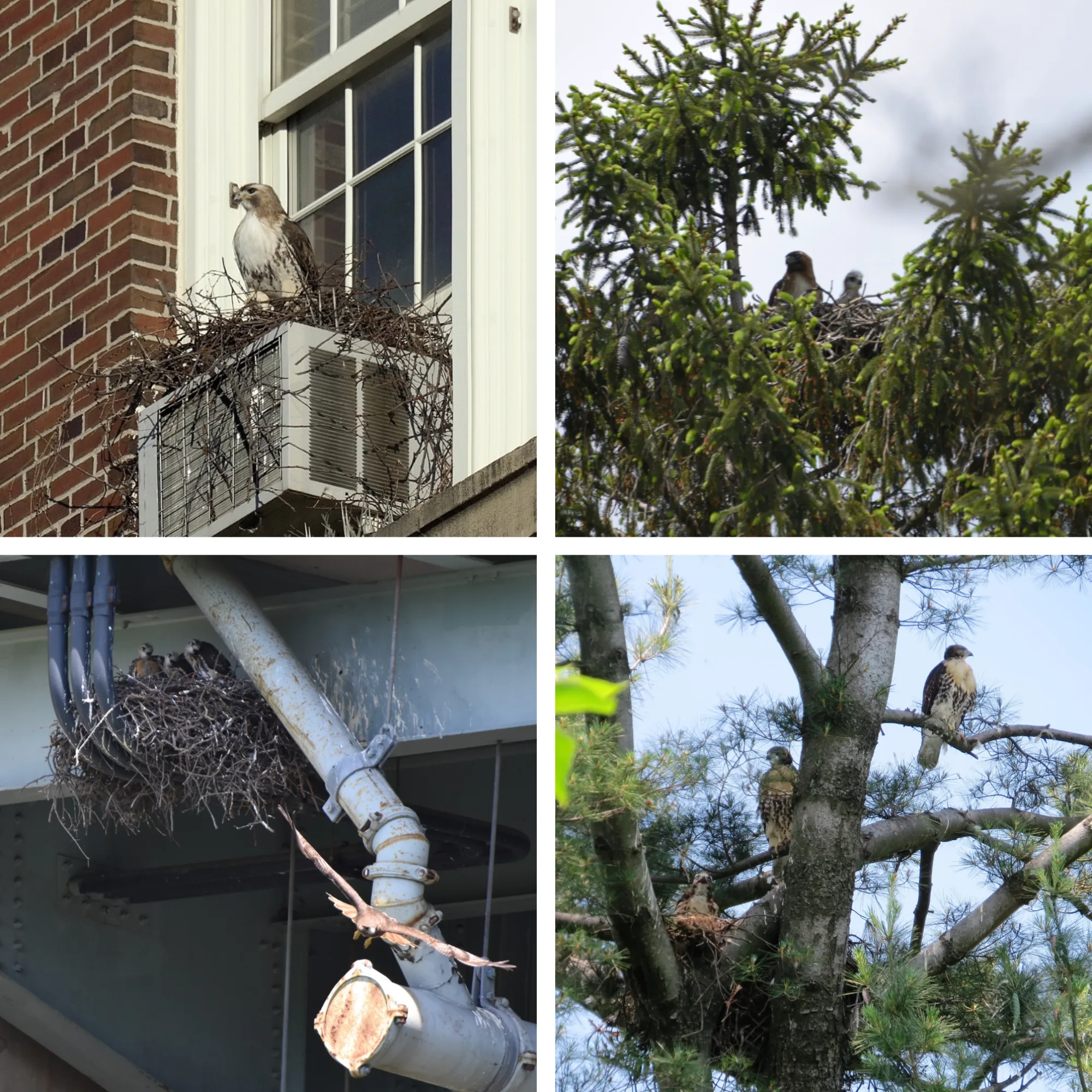
Abstract photo. Red-tailed hawks nesting on a variety of support structures in New York City. 1) Top left: Red-tailed hawk starting to build a nest on top of an exterior building AC window unit (human-made support structure). 2) Top right: Adult red-tailed hawk and chick standing in a nest on an evergreen tree (natural support structure). 3) Bottom left: Three chicks watch an adult red-tailed hawk fly out of their nest underneath a bridge roadway (human-made support structure). 4) Bottom right: Three juvenile red-tailed hawks “branching” from their nest in a pine tree (natural support structure). Photo credits: 1) Jim McNamee, 2) NYC Parks, 3) NYC Parks, 4) Ann Feldman.
Abstract
Urban environments provide diverse nesting opportunities for raptors (Berardi, 2025; Buenaño-Mariño et al., 2025), yet the effects of human-made structures on reproductive outcomes remain unclear. Using data from City of New York Parks & Recreation’s (NYC Parks) Raptor Nest Monitoring project, we compared apparent nest success and site longevity of 216 red-tailed hawk (Buteo jamaicensis) nests built on human-made versus natural support structures across New York City. Apparent nest success, the proportion of nests with at least one observed fledgling, did not differ significantly between nests on human-made (0.886) and natural (0.797) support structures. Likewise, there was no significant difference in nest site longevity between support types. These findings suggest that red-tailed hawks reproduce with similar success on both natural and human-made structures, highlighting the importance of incorporating wildlife considerations into urban design and management.
Keywords: urban wildlife, raptors, nest success, nesting adaptations, red-tailed hawk
Introduction
New York City’s parks are home to numerous species of breeding raptors (New York State Breeding Bird Atlas, 2000). The red-tailed hawk (Buteo jamaicensis) is one species that is increasingly demonstrating tolerance of human presence, nesting across a wide range of habitats including highly developed urban environments (White et al., 2018). A red-tailed hawk nicknamed “Pale Male” became an NYC celebrity by using a decorative window ledge to support its nest, starting in the mid-1990s (NYC Bird Alliance, 2026). Today, it is now common to observe other hawk pairs engaging in this same behavior using human-made structures to support nests.
The City of New York Parks & Recreation (NYC Parks) has been monitoring rodent-consuming raptor nests since 2008 to inform interagency rodent mitigation practices (NYC Parks, internal reports, 2017-2025). The primary goal of the monitoring project is to reduce secondary rodenticide poisoning of raptors, so monitoring is focused on rodent-consuming species. NYC Parks temporarily suspends rodenticide use in areas with active nests (NYC Parks, internal memo, 2018). In 2017, NYC Parks’ Wildlife Unit took on this project and expanded it to include a community science element, collecting comprehensive data on nest locations and productivity.
This analysis evaluates whether nest support structure type (human-made vs. natural) affects reproductive success of red-tailed hawks in NYC. As urban landscapes continue to replace availability of natural nest support structures, understanding how built structures function as nesting supports has implications for urban wildlife management, park design, and city planning.
Methods and Materials
Data collection
The study area included all five boroughs of NYC (Figure 1). This analysis focuses on red-tailed hawk nests monitored between 2020 and 2025, a period representing a robust and consistent dataset following formalization of the project. Red-tailed hawks were selected as the focus of this analysis due to a larger sample size within the data.
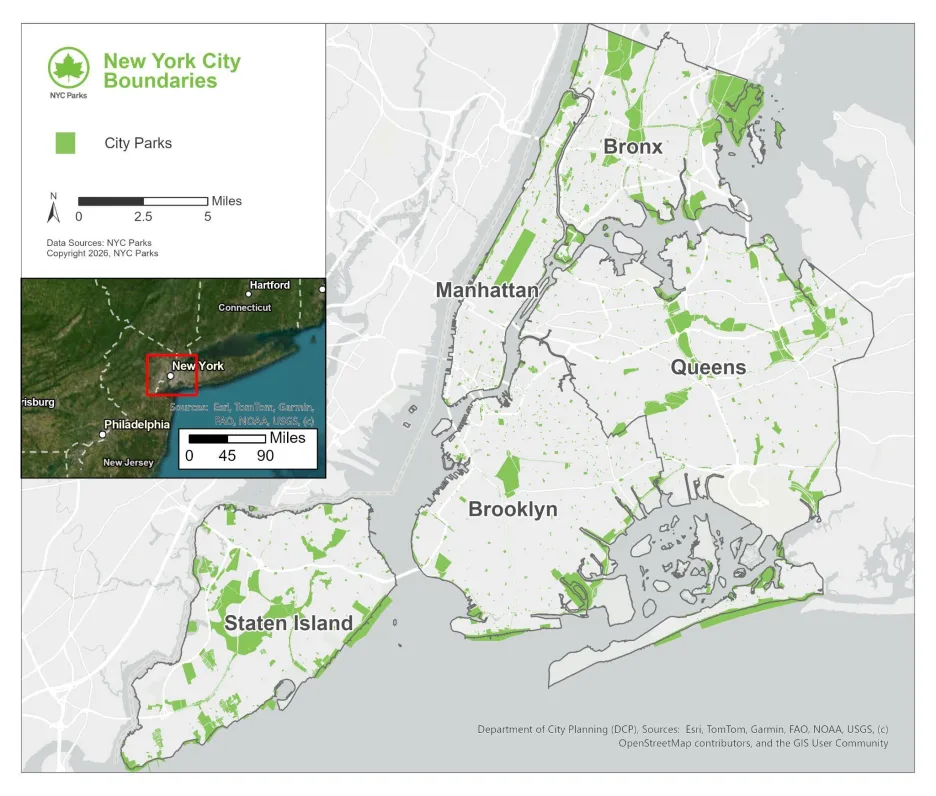
Figure 1. Map of New York City with delineated boundaries of the five boroughs and parkland managed by NYC Parks (highlighted in green). Note: study area included all five boroughs, not limited to parks.
Nesting observations were contributed by NYC Parks staff and trained community scientists. Once an active nest was located, monitors recorded site characteristics, nest support structure (human-made or natural), key breeding milestone dates, and estimates of chick and fledgling numbers using standardized, non-invasive observation protocols developed by our team.
Breeding milestones were approximated based on observed bird behavior. Monitors recorded the incubation date as the first observation of an adult sitting in a nest. Hatch date was recorded when nestling care was first observed, such as adults returning to the nest with prey. Fledging was recorded as the first observation of a juvenile hawk away from the nest–perched on a structure other than the direct nest support element, or upon indication of first flight.
Analysis
Nest site longevity and apparent nest success (ANS) were analyzed, and results were compared between nests on human-made and natural support structures. Nest site longevity is defined here as the number of consecutive years a site was utilized by red-tailed hawks. A two-sample t-test assuming equal variances was conducted to determine if there was a significant difference between the groups. ANS is defined as the proportion of nests with at least one observed fledgling among nests with known outcomes. A chi-square test of independence was conducted to assess the relationship between fledging success and type of nest support.
ANS was used because the lack of exact dates for breeding milestones across all monitored nests precluded the use of other estimation methods. Although ANS is known to positively bias estimates of reproductive success, we followed recommendations from Steenhof and Kochert (1982) by including only nests with known approximate incubation start dates and known final outcomes. This reduced bias associated with nests discovered later in the breeding season, which had a higher probability of success at this later stage.
Between 2020 and 2025, a total of 216 active red-tailed hawk nests were documented across NYC. Natural support structures were more common, accounting for 65% of nest site locations (Figure 2). Within the sample, 117 sites met criteria for inclusion in the nest longevity analysis (minimum incubation start date observed), with 32% sites on human-made support structures and 68% on natural support structures. ANS was calculated for 123 nests (those with both approximate incubation start dates and known outcomes) including 36% nest attempts on human-made support structures and 64% on natural support structures.
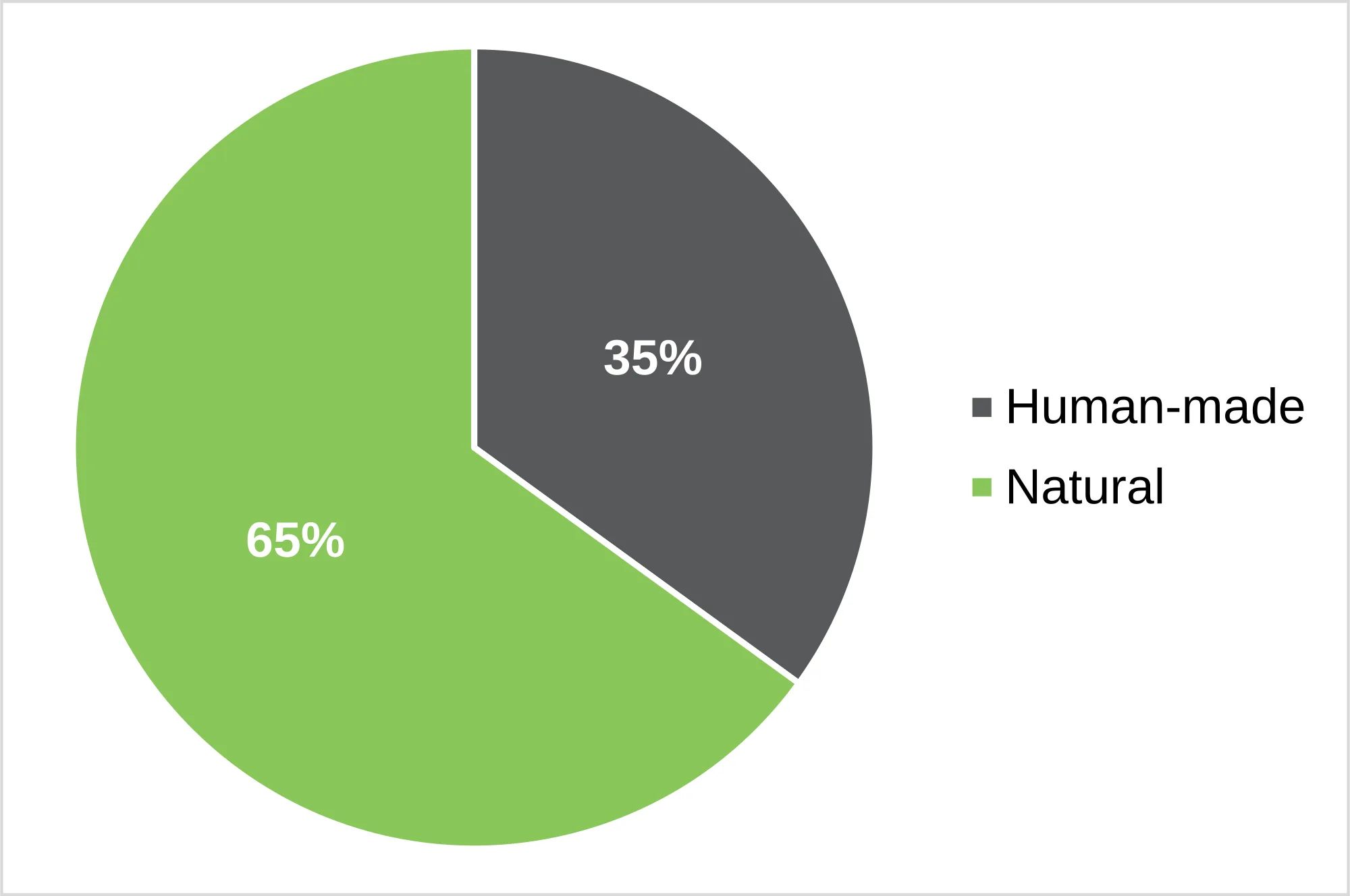
Figure 2. Nest support structure type for all active red-tailed hawk nests monitored in NYC 2020–2025 (216 Total).
Results
Nest site longevity
The mean and median nest longevity were calculated between support types: human-made structures averaged 1.97 years with a median of 2, while natural supports averaged 1.77 years with a median of 1. Only one site, located on a human-made structure (the Unisphere in Flushing Meadows Corona Park), remained active across all six years of this study period (Figure 3).
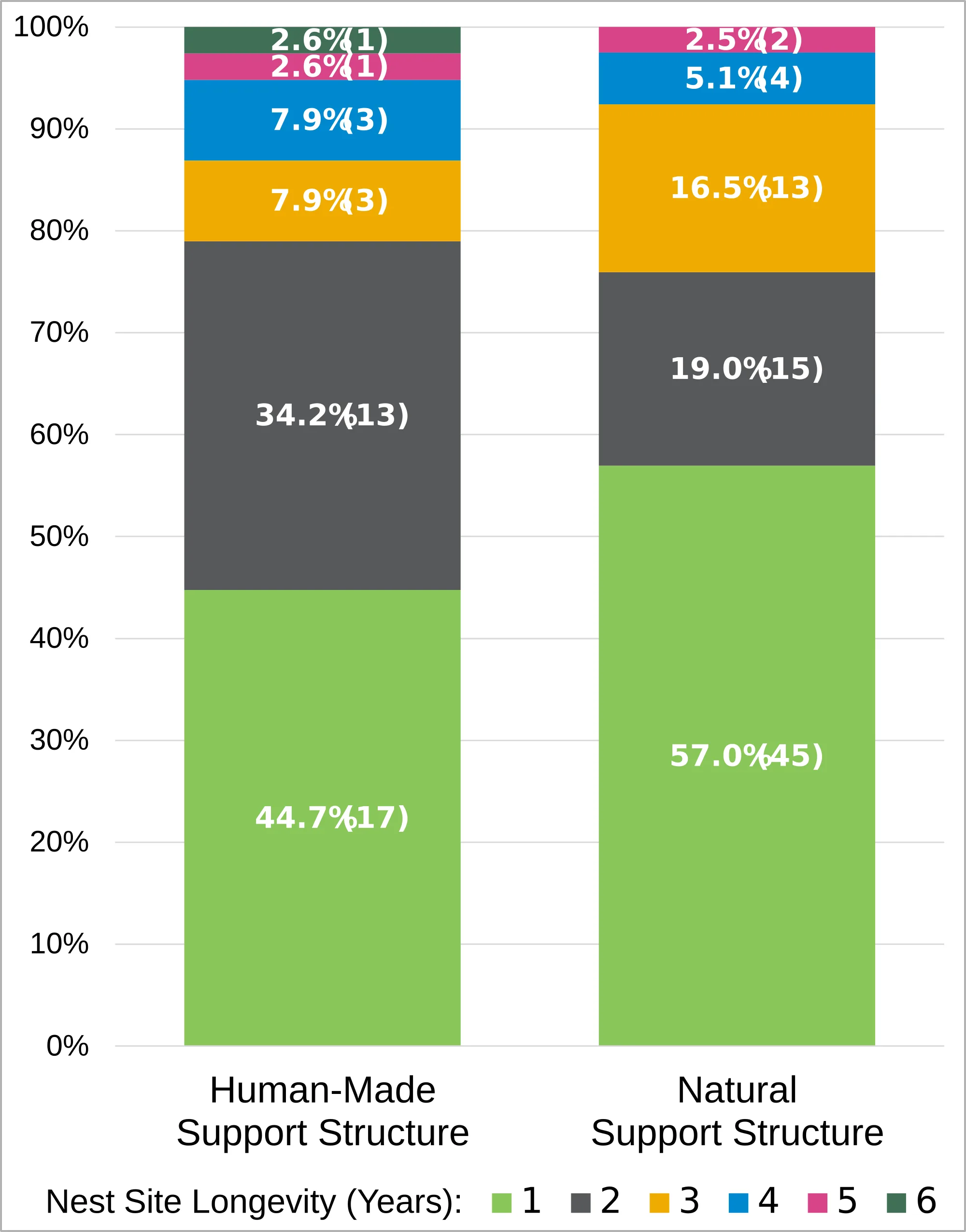
Figure 3. Red-tailed hawk nest site longevity by support structure type (human-made or natural), with percent‑within‑type and raw count labels.
Nest longevity did not differ significantly between human-made and natural support structures. A two-sample t-test assuming equal variances demonstrated that support structure types did not impact nest longevity (t0.05(2) = 0.91; p=0.182)
Apparent nest success
ANS was calculated for each support type using the number of nests with at least one observed fledgling (“successful” in Table 1) divided by the total number of nests with known outcomes (“total” in Table 1). ANS for nests on human-made structures was 0.886, compared to 0.797 for nests on natural supports (Table 1). This did not demonstrate a significant relationship between ANS and support structure types (χ²=1.576, df=1, p=0.209).
|
Support Type |
Successful1 |
Unsuccessful |
Total2 |
ANS (1/2) |
|---|---|---|---|---|
|
Human-Made |
39 |
5 |
44 |
0.886 |
|
Natural |
63 |
16 |
79 |
0.797 |
Discussion
These results demonstrate that red-tailed hawks successfully nest on human-made and natural support structures within New York City. Although this analysis does not demonstrate that either human-made or natural structures provide greater nest success or longevity, several factors may help explain why red-tailed hawks are able to successfully utilize the built environment.
One potential benefit of nesting on human-made structures is reduced predator access. Predator proximity and landscape characteristics can influence nest site selection and breeding success in raptors (Atuo & O’Connell, 2018). Nests in highly developed areas could be less vulnerable to predators that prefer forested green spaces. Great horned owls (Bubo virginianus) are known to prey on red-tailed hawk eggs and nestlings (Springer & Kirkley, 1978), and are more commonly reported hunting and roosting in natural areas than in densely developed areas (eBird, 2021). As one example, NYC Parks’ long-term monitoring has documented only one case of great horned owl predation on a red-tailed hawk nest, which occurred on a natural support structure within a large cemetery.This anecdotal observation illustrates how the landscape context of a nest may influence its exposure to predators.
Human-made structures may also provide opportunities for hunting. Red-tailed hawks hunt by perching and scanning for prey (Heintzelman, 2004). Built environments provide a variety of elevated perches, such as decorative building elements, fire escape railings, statues, and window air conditioning units, to name just a few documented in our observations. When adjacent to open space like parks, these features may be advantageous for visual hunters like hawks. Open space in New York City is more than just large flagship parks like Central Park or Prospect Park; across the five boroughs are over 150 small parks that are 20 acres or less, surrounded by potential perches from the built environment (Figure 1). (New York City Parks & Recreation, 2026). Sightings of red-tailed hawks have been documented in many of these small parks demonstrating their potential as habitat (eBird, 2021), in addition to our project monitoring active breeding around at least 10 of these small parks.
Questions remain about what drives selection of nest support type and the influence it has on success at other stages, such as during nest initiation or after fledging. Our sample shows fewer nests on human-made structures than natural structures (35% compared to 65%, respectively) (Figure 2). Relative availability of suitable structures, preferential selection of natural structures, or differences in nest detectability during data collection are some potential factors to explain the proportions of this sample. Future research incorporating individual hawk identification and long-term tracking could help determine if rearing experience influences nest site selection or if hawks choose sites opportunistically. For example, it remains unknown whether the offspring of Pale Male in NYC preferentially selected human-made structures when establishing their own nests.
Based on this project’s nest monitoring, red-tailed hawks are one of several raptor species in NYC observed using human-made structures for nesting; others include American kestrels (Falco sparverius), peregrine falcons (Falco peregrinus), ospreys (Pandion haliaetus), and barn owls (Tyto furcata) (New York State Breeding Bird Atlas, 2000; NYC Parks, internal reports, 2017-2025). As urban development continues to expand, integrating wildlife-safe design into buildings, bridges, and other infrastructure will become increasingly important, along with continued preservation and restoration of natural areas. Structure design in urban parks would also benefit from evaluation through a wildlife-use lens. For example, light towers surrounding recreational fields may provide nesting platforms, and their design could also be evaluated to determine if staff can perform necessary maintenance during the breeding season while minimizing disturbance. Park managers, wildlife biologists, and city planners should keep these considerations in mind for future designs and operations.


Acknowledgments
We would like to acknowledge the large contribution of community scientists and NYC Parks employees who have made field observations and collected data for this long-term project.
Author Contributions
Sunny Corrao: conceptualization, data curation, formal analysis, methodology, project administration, visualization, writing - original draft, review & editing;
Sylvia Wood: conceptualization, data curation, visualization, writing - original draft, review & editing;
Mark Pastore: conceptualization, data curation, methodology, project administration, writing - review & editing;
Amber Krauss: investigation;
Alexis Pristina: investigation;
Sara Rudolph: investigation;
Richard Simon: conceptualization, supervision, writing - review and editing;
Sarah Grimké Aucoin: supervision
Data Availability
To protect nest locations, we do not post data publicly. Visit NestWatch map room to see nesting locations for NYC species more tolerant of human activity. Location data collected by community scientists since 2018.
Transparent Peer Review
Results from the Transparent Peer Review can be found here.
Recommended Citation
Corrao, S., Wood, S., Pastore, M., Krauss, A., Pristina, A., Rudolph, S., Simon, R., & Grimké Aucoin, S. (2026). Influence of the Built Environment on Red-Tailed Hawk (Buteo jamaicensis) Nesting in New York City: A Comparison of Nest Success and Site Longevity Across Human-Made and Natural Nest Supports. Stacks Journal: 26017. https://doi.org/10.60102/stacks-26017
Conflicts of Interest
The authors declare no conflicts of interest.
Funding Information
This study did not receive any specific funding. However, this study was possible due to the support and participation of the New York City Parks & Recreation staff and community scientists.
AI Use Statement
Microsoft Copilot was used to assist with structural outlining and review after the original article content had been written.
Copyright
© 2026 Sunny Corrao, Sylvia Wood, Mark Pastore, Amber Krauss, Alexis Pristina, Sara Rudolph, Richard Simon, & Sarah Grimké Aucoin. This article is open access and distributed under the terms and conditions of the Creative Commons Attribution (CC BY 4.0) license.
Supplementary Information
Learn more about wildlife in New York City: NYC Parks & WildlifeNYC.
References
Atuo, F. A., & O’Connell, T. J. (2018). Superpredator proximity and landscape characteristics alters nest site selection and breeding success of a subordinate predator. Oecologia, 186(3), 817–829. https://doi.org/10.1007/s00442-018-4071-0
Berardi, V. (2025, July). Raptors rebound. Natural Awakenings Chicago, 18. https://www.nachicago.com/2025/06/30/537816/july-2025-issue-farmers-markets-summer-wellness-and-local-microadventures-across-chicagoland
Buenaño-Mariño, C. D. P., Sabán, J., Barba, E., & García-Esparza, J. A. (2025). Urban form shapes bird niches: insights from the European green capital 2024. Biodiversity and Conservation, 34(5), 1857–1879. https://doi.org/10.1007/s10531-025-03050-9
eBird. 2021. eBird: An online database of bird distribution and abundance [Status and Trends application]. eBird, Cornell Lab of Ornithology, Ithaca, New York. Available: https://science.ebird.org/en/status-and-trends/species/grhowl/abundance-map?regionCode=USA-NY (Accessed: August 4, 2026).
Heintzelman, D. S. (2004). Chapter 11: Soaring Hawks. In Hawks & Owls of Eastern North America (pp. 96–114). Rutgers University Press.
New York City Parks & Recreation. (2026). “Parks Properties”. https://nycopendata.socrata.com/Recreation/Parks-Properties/enfh-gkve/about_data
New York State Breeding Bird Atlas 2000 [Internet]. 2000 - 2005. Release 1.0. Albany (New York): New York State Department of Environmental Conservation. [updated 2007 Jun 11; cited 2026 Sep 22]. Available from: https://www.dec.ny.gov/animals/7312.html
NYC Bird Alliance. “Red-tailed Hawks in NYC.” Retrieved 2026. https://nycbirdalliance.org/our-work/conservation/urban-raptors/red-tailed-hawks-in-nyc
Springer, M. A., & Kirkley, J. S. (1978). “Inter- and Intraspecific Interactions Between Red-tailed Hawks and Great Horned Owls in Central Ohio.” Ohio Journal of Science, 78, 323–328.
Steenhof, K., & Kochert, M. N. (1982). An evaluation of methods used to estimate raptor nesting success. The Journal of Wildlife Management, 46(4), 885. https://doi.org/10.2307/3808221
White, J. H., Smith, J. M., Bassett, S. D., Brown, J. L., & Ormsby, Z. E. (2018). Raptor nesting locations along an urban density gradient in the Great Basin, USA. Urban Ecosystems, 21(1), 51–60. https://doi.org/10.1007/s11252-017-0705-y