One Health, One Welfare: A Unifying Framework for Zoos
CollaboratorsReviewers can opt-in to be listed as a Collaborator on the manuscript as recognition for their contributions.: Bryan Hughes & Tyler Brasington + 2 other reviewers
* This article is part of a Special Issue from the Wildlife Health Working Group.
Abstract
Zoos and aquariums have long faced the challenge of integrating conservation, animal care and welfare, and efforts to connect people with nature. Although these priorities are central to modern, accredited zoos, they are often addressed by separate teams within an organization, which may limit opportunities for collaboration and broader impact. One Health, One Welfare (OHOW) offers an interdisciplinary framework that promotes the shared health and wellbeing of people, animals, and the environments we share. We propose that OHOW can serve as a unifying framework to support zoo missions through more intentional integration of their diverse areas of expertise. We illustrate how existing zoo activities align with OHOW principles and highlight opportunities to strengthen connections between wildlife conservation, animal care and welfare, environmental and public health, and community engagement. Finally, we argue that zoos are uniquely positioned to play a leading role in OHOW initiatives including protecting wildlife, public health, and ecosystems around the world.
Keywords: animal welfare, wellbeing, animal care, community engagement, conservation
Introduction
Zoos and aquariums bring together expertise in conservation, animal care and welfare, and connecting people with nature. However, these areas have historically operated as distinct, often siloed, components of zoo missions. This separation inevitably limits opportunities for zoo teams to leverage their collective strengths. For example, separate teams are typically responsible for animal care, conservation, and public engagement, despite the interdependence of animal, human, and environmental health and wellbeing. The One Health framework offers an approach to bridge these areas by recognizing the interconnectedness of human, animal, and environmental health [1]. Complementing this approach, One Welfare explicitly emphasizes the interconnections among animal welfare, human wellbeing, and the environment [2]. Together, these complementary frameworks have been integrated into the One Health, One Welfare (OHOW) approach [3, 4], providing a holistic and unifying framework for connecting initiatives across zoo departments.
Animal welfare is a core priority for accredited zoos [5], making its explicit inclusion important when adopting interdisciplinary frameworks. While health is an important component of animal welfare, it does not, on its own, fully encompass positive wellbeing [6]. For example, the Five Domains Model, commonly used to assess animal welfare in accredited zoos, recognizes that health, nutrition, the physical environment, and behavioral interactions collectively influence an animal’s mental state (the fifth domain) and overall welfare [6]. Thus, while One Health recognizes the connections between humans, animals, and the environment [1], its focus on health may overlook broader welfare considerations central to modern zoo missions [5]. By explicitly incorporating animal welfare alongside human and environmental health and wellbeing, OHOW offers a more comprehensive approach to advancing these interconnected priorities.
To date, interdisciplinary initiatives within zoos have often been framed through One Health rather than OHOW. For example, St. Louis Zoo’s Institute for Conservation Medicine hosts an annual One Health Fair in partnership with local medical and veterinary schools [7] and surveyed local communities to inform One Health messaging within the organization [8]. Similarly, Lincoln Park Zoo launched a One Health Initiative to optimize wellbeing for humans, animals, and cities [9], including research on how urban environments affect the health and wellbeing of local wildlife and the public health implications of human-wildlife interactions. Although these initiatives may already incorporate aspects of animal welfare, the OHOW framework provides an opportunity to more explicitly and systematically consider an animal’s wellbeing [10] alongside human wellbeing and environmental health. Importantly, this does not necessarily require developing entirely new initiatives, but rather expanding existing interdisciplinary efforts to ensure that animal welfare is consistently considered alongside other health and wellbeing outcomes.
Accredited zoos are well positioned to advance OHOW given their expertise across animal health and welfare, conservation, and public engagement, as well as their adherence to established professional standards. Comprehensive independent evaluations of animal welfare, veterinary care, conservation, and education programs provide a foundation for integrating these disciplines through OHOW. OHOW encourages zoos to connect work across disciplines and incorporate conservation and human wellbeing into an animal welfare focused care program (Figure 1). In this perspective, we seek to broaden awareness of OHOW and highlight the potential for zoos to serve as leaders in advancing OHOW initiatives.
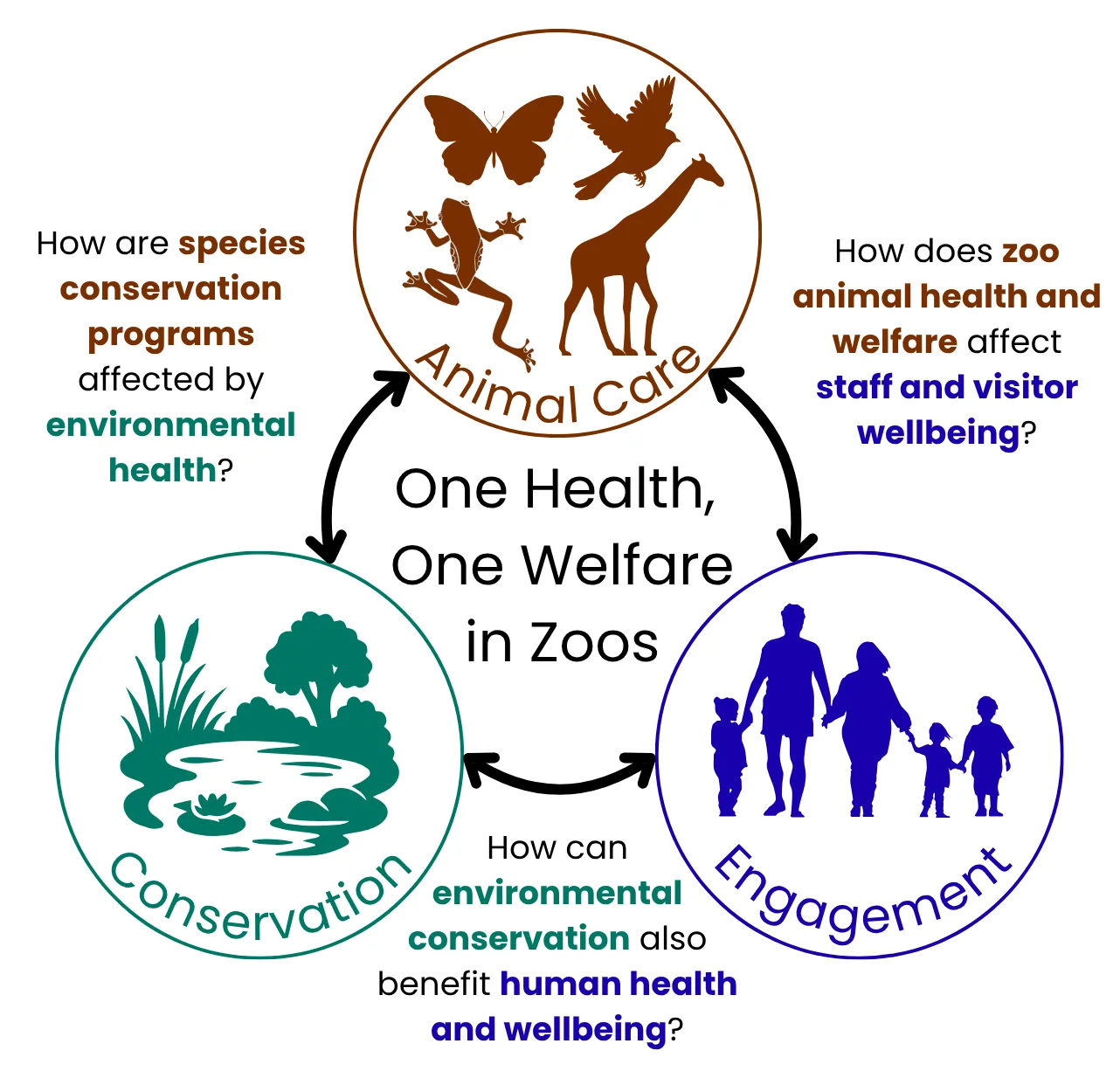
Figure 1. Conceptual diagram showing example guiding questions that connect animal care, guest and community engagement, and conservation in zoos within the One Health, One Welfare framework.
Animal Health and Welfare in Zoos
Positive animal welfare is paramount to modern, accredited zoos, providing the ethical foundation and social license that enable zoos to fulfill their mission. Building on this foundation, OHOW recognizes reciprocal connections between animal care and conservation. Ex situ research on zoo-housed animals can generate knowledge about behavior, physiology, and welfare that may be difficult to obtain in natural environments and can inform field handling, reintroduction, and other conservation efforts. For example, research examining physiological responses to capture and restraint in zoo-housed crocodilians has informed recommendations for minimizing handling-related stress, with potential applications to wildlife management and field research [11]. Conversely, in situ research on animals in their natural environments can provide insights into species-typical activity budgets, ecology, and environmental preferences that inform enclosure design, enrichment strategies, social management, and other care practices. For example, field research on nest-building behavior and sleeping-site preferences in wild great apes has informed recommendations for nesting opportunities and sleeping arrangements in zoos, illustrating how knowledge of natural behavior can guide husbandry practices that support animal welfare [12].
These reciprocal benefits also extend to how zoos engage people with animals through educational programming, creating opportunities to simultaneously advance animal welfare, engage visitors in conservation initiatives, and support human wellbeing. While animals can play important roles in conservation education and public engagement, OHOW requires that their participation be guided by clearly articulated welfare objectives alongside learning and engagement goals. This includes selecting species and individuals appropriate for these roles. For example, nocturnal species should not participate in daytime programming when doing so conflicts with their natural history and may compromise health and welfare [13, 14]. Similarly, presenting animals in highly artificial contexts, such as moving animals from their home enclosures to a performance stage or holding them by hand [15], may negatively affect welfare while missing valuable opportunities to educate visitors about natural ecosystems by presenting animals in more naturalistic contexts. OHOW instead encourages educational programs that prioritize animal welfare via alignment with natural history and providing animals with opportunities for choice and control over participation [16-18], while simultaneously engaging the public with conservation messaging and environmental sustainability initiatives.
Food systems provide another opportunity to apply OHOW across animal welfare and environmental sustainability. Welfare responsibilities extend to live animals used as feed within zoos (e.g., mealworms, fish, mice), which are often overlooked in institutional welfare programs [19]. Feeder animal welfare should be considered throughout their time in zoo care, from sourcing and husbandry through their use as feed. Feeder animals should be sourced from vendors that meet institutional health and welfare standards, and housed according to species-specific needs aligned with natural history. Doing so not only supports the welfare of the animal used as feed, but can also improve their nutritional quality [20]. During live feeding, practices should minimize negative welfare impacts, such as by ensuring feeder animals are consumed promptly rather than left injured or uneaten. Applying institutional animal welfare standards to feeder animals, including routine welfare monitoring, species-appropriate husbandry, and oversight of live-feeding practices, can support their welfare while also promoting the nutrition and behavioral opportunities of the animals consuming them. OHOW also encourages consideration of the environmental impacts of food/feed sourcing. For example, while some zoos import plants for animals with specialized diets, others grow them on site [21]. Likewise, selecting food/feed vendors based on factors such as organic and humane production practices can align operational decisions with broader OHOW goals.
OHOW similarly encourages zoos to consider the health and welfare of free-living animals, including species that must be controlled because they are invasive or potentially harmful. For example, commensal rodents attracted to resources on zoo grounds may transmit pathogens to zoo animals [22] or damage property. Under the OHOW framework, methods to control unwanted animals should minimize pain and suffering while reducing unintended impacts on the broader ecosystem. Some pest management strategies, for example, can poison non-target animals or cause secondary poisoning of predators and scavengers [23, 24]. Pest management approaches that emphasize prevention and environmental modification while minimizing harms to target and non-target animals and the broader ecosystem therefore provide a more holistic approach consistent with OHOW principles [25, 26]. These considerations are consistent with Integrated Pest Management [27], which promotes a more holistic approach to pest management that includes monitoring pest populations to understand the root causes of infestations, physically excluding pests, removing pest attractants, and reducing reliance on pesticides that can unintentionally harm the broader ecosystem. Adopting these principles when controlling pests is one way that zoos can adapt OHOW principles as part of on-grounds activities.
Human Wellbeing in Relation to Zoos
Zoos can contribute meaningfully to human wellbeing by fostering connections to nature [28], supporting staff [29], engaging visitors [30], and strengthening connections within broader communities [31]. These outcomes are mutually reinforcing, as positive perceptions of animals are closely tied to high standards of animal welfare [32, 33], which impact staff and visitor experiences and wellbeing [30, 34]. In turn, this positive feedback loop between animal welfare and human wellbeing may also influence human behavior toward sustainability and conservation initiatives [35].
For zoo staff, OHOW emphasizes the meaning derived from caring for animals and the institutional conditions necessary to support that work. Animal care professionals often report strong emotional connections to the animals they manage, which can enhance job satisfaction and sense of purpose [29]. However, poor working conditions, inadequate training, excessive workloads, and caregiver burnout and compassion fatigue [36] can compromise staff wellbeing and potentially affect animal welfare [37]. OHOW therefore encourages institutions to invest in manageable workloads, equitable working conditions, health and wellness resources, and training and professional development that enable staff to provide high-quality care. Importantly, training itself should not remain siloed. Cross-departmental learning among animal care, conservation, and education teams can expose staff to different perspectives and build a shared understanding of how their roles contribute to animal, human, and environmental health and wellbeing. In this way, OHOW can strengthen staff capacity and organizational culture while supporting positive animal welfare and conservation outcomes.
For visitors, zoos provide accessible opportunities to connect with nature, particularly in increasingly urbanized communities. These experiences can support emotional wellbeing by eliciting positive feelings such as joy and relaxation [38]. Observing healthy, active animals engaged in species-typical behaviors enhances visitor satisfaction and perceptions of zoos as ethical institutions [34], further illustrating the connection between animal welfare and human experiences. Through educational exhibits and programming, zoos can also increase awareness of biodiversity conservation and provide opportunities for visitors to engage in pro-environmental behaviors and sustainability initiatives.
OHOW further encourages zoos to extend these connections beyond their grounds by building reciprocal relationships with local communities. Rather than solely providing conservation education, zoos can learn from community members about local priorities, knowledge, and barriers to engagement while contributing institutional expertise and resources. Community science, habitat restoration, and community gardens, for example, can provide opportunities for shared learning, strengthen social connections and environmental stewardship, and benefit local biodiversity. Engagement in conservation initiatives can also support physical, psychological, spiritual, and social health and wellbeing of participants [39, 40]. By investing in staff, creating positive visitor experiences, and developing reciprocal community partnerships, zoos can create positive feedback loops in which animal welfare, human wellbeing, and environmental stewardship reinforce and strengthen one another.
Zoo Actions to Conserve Healthy Ecosystems
Another important pillar to the mission of accredited zoos is the conservation of wildlife populations. Zoos are uniquely positioned to advance ex situ conservation through cooperative population management, which is a data-driven decision-making process in which population biologists, species coordinators, and animal care experts collaboratively plan animal transfers and breeding to support sustainable animal populations in managed care. Additionally, many zoos contribute to in situ conservation [41], for example through monitoring and reintroduction programs [42, 43]. The OHOW framework can help align in situ and ex situ conservation efforts to improve the health and wellbeing of wildlife and their habitats. For example, zoos support reintroduction projects for amphibians [44], which have been decimated by disease from chytrid fungus Batrachochytrium dendrobatidis or Bd [45]. To increase healthy frog populations, the Oakland Zoo inoculated and treated native yellow-legged frogs (Rana spp.) against Bd and released treated frogs back into wild populations [46]. Similarly, zoos rehabilitate animals confiscated from illegal wildlife trafficking [47], which are often critically ill and require intensive veterinary care and quarantine procedures to return to health. During rehabilitation, attention to both physical health and animal welfare is essential to promote recovery, and when possible, prepare animals for successful reintroduction. Animals deemed unsuitable for release may remain in zoos for the remainder of their life, where their long-term health and welfare are a continuous priority. In some cases, individuals may eventually contribute to conservation breeding programs. Each of these pathways illustrates the interdependence of animal health, welfare, and conservation outcomes, which are central to OHOW. Zoo scientists and veterinarians are experts in wildlife disease [48], veterinary medicine, and animal welfare, and can apply this interdisciplinary knowledge to support conservation efforts, both in situ and ex situ .
In addition to bolstering the size and health of declining populations, reintroduction programs can also improve the health of surrounding ecosystems. For example, the Five Sisters Zoo, in partnership with the Beaver Trust, helped support the reintroduction of Eurasian beavers in Purbeck, England, where the species had been locally extirpated since the 16th century [49]. Beavers are ecosystem engineers that retain water on the landscape, which positively affects local biodiversity and reduces the impacts of wildfire on forested ecosystems [50]. Further, as a flagship species, the reintroduction of beavers can have positive psychological benefits on the community [51]. In these cases, zoos can advocate for wild animal welfare, lead science that validates welfare indicators during reintroduction, and spearhead programs that promote ecosystem health and environmental stewardship. These examples showcase OHOW connections between human tolerance for conflict-prone species, wildlife health and welfare expertise, and the positive impacts on ecosystem health and human wellbeing.
Additionally, zoos can help protect and restore habitats that benefit wildlife as well as human health and wellbeing. For example, the American Association of Zoo Keepers initiated the Acres for the Atmosphere program, which plants trees in local communities surrounding zoos [52]. In addition to supporting biodiversity and wild animal welfare, higher canopy cover from tree plantings promotes human health by providing shade and improving air quality, as well as promoting psychological wellbeing [53, 54]. For example, walking on forest trails and hearing birdsong are associated with reduced stress and increased happiness [55-57]. Past research has shown that these opportunities to experience nature are not equitable, and, through discriminatory practices, underserved communities in urban areas may be restricted from nature [58, 59]. Therefore, zoos have the unique opportunity to provide equitable experiences that connect people to nature and wildlife. Zoos with free or low-cost admission, community engagement initiatives within underserved communities, and accessible, educational content are particularly well-suited to bridge this gap. OHOW highlights the connections between wildlife conservation, human wellbeing, and animal welfare, helping zoos to create positive outcomes for people and the planet.
Operationalizing the OHOW framework in zoos
Operationalizing OHOW requires moving beyond isolated initiatives toward an institution-wide approach in which animal welfare, human wellbeing, and environmental health and conservation are considered across zoo activities and decision-making. Importantly, adopting OHOW does not require zoos to develop entirely new programs. Many existing activities already align with OHOW principles, but they may currently be considered independently or managed by different departments. Applying OHOW may help zoos identify opportunities for mutually beneficial outcomes while recognizing potential trade-offs, such as between individual animal welfare and population-level conservation goals, or unintended consequences such as impacts of pest-management on non-target wildlife.
There are many opportunities to apply the OHOW framework across zoo departments (Table 1). Implementing an institution-wide approach requires collaboration across traditional departmental boundaries. OHOW is inherently interdisciplinary; no single person can be an expert in all the many relevant fields spanning medicine to landscape ecology to animal welfare science to community engagement. Cross-departmental teams, shared training, and regular opportunities for staff to contribute their expertise can help reduce organizational siloes and support decision-making that aligns with OHOW. Embedding OHOW principles into strategic planning, research priorities, and program development can further operationalize this approach.
| Zoo activity | Examples of applying the OHOW framework |
|---|---|
| Animal care | Monitor and promote positive welfare of zoo animals, including animals used as live feed |
| Prevent the transmission of zoonoses and “reverse zoonoses” between staff, guests, and zoo animals through preventative health programs and biosecurity | |
| Consider individual animal welfare when making population management and veterinary decisions | |
| Consider environmental impacts when making animal care decisions, including energy use, waste, and sourcing of materials and feed | |
| Veterinary medicine and epidemiology | Conduct disease surveillance, including emerging and zoonotic diseases to support zoo animal, wildlife, and human health |
| Share relevant wildlife-health information with public health and conservation partners to support coordinated responses | |
| Consider individual animal welfare alongside population health, conservation, and human health outcomes when making veterinary decisions | |
| Groundskeeping and horticulture | Reduce water use and runoff to protect ecosystems while supporting sustainable zoo operations |
| Use integrated pest management to minimize risks of pesticides and rodenticides to zoo animals, free-living wildlife, humans, and ecosystems | |
| Plant native vegetation to support local wildlife and ecosystem health while creating restorative green spaces for guests and staff | |
| Design grounds to provide habitat and connectivity for local wildlife | |
| Consider the welfare of free-living animals when preventing or managing human-wildlife conflicts | |
| Conservation | Combat wildlife trafficking to protect wild populations, individual animal welfare, ecosystem health, and human communities |
| Support research and conservation actions to protect wildlife health, welfare, and healthy ecosystems | |
| Integrate animal welfare into conservation planning and interventions | |
| Partner with local communities to develop conservation strategies that consider human wellbeing and livelihoods alongside wildlife and ecosystem outcomes | |
| Community engagement | Co-create programs with communities to identify and address interconnected animal, human, and environmental priorities |
| Support equitable access to nature and raise awareness of the connections between human wellbeing and conserving local biodiversity | |
| Promote actions that support healthy local ecosystems and communities | |
| Promote human well-being through positive human-nature experiences | |
| Address environmental justice and unequal exposure to environmental harms affecting people, animals, and ecosystems | |
| Guest engagement | Demonstrate connections between human wellbeing and wildlife conservation from local to global scales |
| Promote actions that support healthy animals and ecosystems such as reducing pesticide use, preventing bird collisions, and planting native vegetation | |
| Demonstrate how zoo husbandry promotes positive animal welfare and how animal care decisions intersect with human and environmental health and wellbeing | |
| Explicitly connect animal welfare, conservation, and human health and wellbeing in interpretive programming | |
| Administration | Incorporate animal welfare, human wellbeing, and environmental sustainability into procurement decisions when sourcing materials and food/feed |
| Create infrastructure to promote energy efficiency and to reduce waste | |
| Design buildings and infrastructure to support human wellbeing and reduce negative impacts on free-living animals (e.g., bird-safe windows, native landscaping, green roofs) | |
| Staff health and wellbeing | Recognize connections between care staff wellbeing and animal welfare |
| Provide cross-departmental training and professional development that connects staff expertise across animal care, conservation, human wellbeing, and environmental health | |
| Protect staff from occupational disease and injury risks while recognizing that safe working conditions can also support high-quality animal care | |
| Support mental health and address compassion fatigue | |
| Provide safe working conditions during extreme weather, poor air quality, and emerging disease events | |
| Research | Conduct research that examines and generates benefits across animal health and welfare, human health and wellbeing, and ecosystem health and conservation |
| Minimize negative welfare impacts on zoo animals and free-living wildlife involved in research while considering the broader conservation, environmental, and societal benefits of the work | |
| Share relevant data that can inform conservation or public health actions | |
| Build interdisciplinary collaborations across veterinary medicine, ecology, animal welfare, and human health to address interconnected challenges |
External partnerships can also complement institutional expertise. Zoos are well-positioned to serve as hubs for OHOW teams by facilitating partnerships with post-secondary institutions, public health agencies [60], private industry, conservation organizations, and local communities. Although public opinion about zoos is nuanced and dynamic [61], zoos are public-facing institutions that often maintain long-term relationships with community organizations, creating opportunities for reciprocal community engagement. As an example, Toronto Zoo hosted the University of Toronto for an inaugural network-building event for the University’s recently developed One Health Consortium [62]. By connecting expertise both within and beyond their organizations, zoos can serve as leaders in advancing the health and wellbeing of wildlife, people, and the habitats we share.
Although OHOW can help integrate and advance programs across zoo departments, operationalizing OHOW can also be challenging. As an interdisciplinary effort, OHOW programs require collaborations between experts in the health and welfare of humans, animals, and the environment. These collaborators may bring discipline-specific jargon, work styles, priorities, and schedules. As such, successful OHOW efforts must emphasize accessible communication and a culture of acknowledging the diverse strengths brought by different team members. Collaborations among institutions can help create such an interdisciplinary OHOW culture, including training opportunities for the next generation. For example, Zoo New England’s Department of Animal Health and Conservation Medicine created a One Health elective rotation for Harvard Medical School students, promoting the benefits of biodiversity for human health [63].
Interdisciplinary perspectives may also reveal competing priorities. Actions may not always be equally beneficial across OHOW domains. Therefore, institutions should aim to explicitly identify potential trade-offs and unintended consequences and incorporate them into decision making. Evaluating the success of OHOW initiatives may present similar challenges as outcomes spanning animal, human, and environmental wellbeing are likely to operate on different timescales. Identifying the intended outcomes and indicators of success prior to implementation can help ensure that everyone involved is focused on shared goals.
Another challenge to implementing OHOW programming is that many zoos are resource-limited and are facing ever-increasing funding challenges, limiting capacity to add new programming. Rather than adding additional costs, we encourage zoos to consider how the OHOW approach can help to identify connections between existing efforts in different departments for their mutual benefit. For example, activities to support the wellbeing of animal care staff may also promote the welfare of animals in zoo care. Similarly, connecting wildlife conservation with human health and wellbeing may create opportunities for interdisciplinary partnerships and funding sources beyond those traditionally available for conservation. In this way, operationalizing OHOW may involve reframing and connecting existing work as much as developing new initiatives.
Conclusion
In conclusion, OHOW is a framework that can unite and mutually benefit zoo programming across diverse departments, including animal care, research, community engagement, groundskeeping, and administration (Figure 1, Table 1). The OHOW framework can help zoos demonstrate the connections between animal welfare, wildlife conservation, and human wellbeing to promote public interest in conservation and increase the relevance of zoos in post-pandemic society. Partnerships, both internal and external, are crucial to the success of OHOW initiatives, and so building relationships with experts in diverse disciplines can expand the scope and impact of zoo-led collaborations. While the OHOW framework can benefit zoos and advance their mission, zoos also play a unique and important role in broader OHOW efforts by connecting the public with nature, supporting conservation initiatives, and promoting positive animal welfare. Advancing such interdisciplinary thinking can help position zoos as leaders in protecting wildlife, public health, and ecosystems around the world.


Acknowledgments
We thank Drs. Seth Magle and Jason Wark, and anonymous reviewers, for providing valuable feedback on earlier versions of this manuscript.
Author Contributions
Shannon L. O’Brien: conception, writing, editing; Maureen H. Murray: conception, writing, editing, figure design
Data Availability
Transparent Peer Review
Results from the Transparent Peer Review can be found here.
Recommended Citation
O'Brien, S. & Murray, M. (2026). One Health, One Welfare: A Unifying Framework for Zoos. Stacks Journal: 26019. https://doi.org/10.60102/stacks-26019
Conflicts of Interest
The authors declare no conflicts of interest.
Funding Information
This research received no external funding.
AI Use Statement
Copyright
© 2026 Shannon O'Brien & Maureen Murray. This article is open access and distributed under the terms and conditions of the Creative Commons Attribution (CC BY 4.0) license.
References
1. Zinsstag, J., Schelling, E., Waltner-Toews, D., & Tanner, M. (2011). From “one medicine” to “one health” and systemic approaches to health and well-being. Preventive veterinary medicine, 101(3-4), 148-156.
2. Pinillos, R. G., Appleby, M. C., Manteca, X., Scott‐Park, F., Smith, C., & Velarde, A. (2016). One Welfare–a platform for improving human and animal welfare. Veterinary Record, 179(16), 412-413.
3. Vidal, B., Verger, L., & Nagy, G. J. (2025). Exploring the One Health–One Welfare nexus and zoonoses. Science in One Health, 100128.
4. Galindo, F., Marchant, J. N., & Tadich, T. A. (2024). The science of animal welfare in the One Health-One Welfare agenda: local solutions for global challenges. Rev. Sci. Tech, 129-140.
5. Association of Zoos and Aquariums. (n.d.). Animal Welfare Committee. https://www.aza.org/animal_welfare_committee. Accessed April 2026.
6. Mellor, D. J., Beausoleil, N. J., Littlewood, K. E., McLean, A. N., McGreevy, P. D., Jones, B., & Wilkins, C. (2020). The 2020 five domains model: Including human–animal interactions in assessments of animal welfare. Animals, 10(10), 1870.
7. Washington University School of Medicine in St. Louis. (2016). Students raise awareness of conservation medicine at zoo event. https://medicine.washu.edu/news/students-raise-awareness-conservation-medicine-zoo-event/. Accessed April 2026.
8. Padda, H., Niedbalski, A., Tate, E., & Deem, S. L. (2018). Member perceptions of the One Health Initiative at a zoological institution. Frontiers in Veterinary Science, 5, 22.
9. Lincoln Park Zoo. (2024). The One Health initiative: Optimizing wellbeing for humans, animals, and cities. https://www.lpzoo.org/the-one-health-initiative-optimizing-wellbeing-for-humans-animals-and-cities/. Accessed April 2026.
10. Reimert, I., Webb, L. E., Van Marwijk, M. A., & Bolhuis, J. E. (2023). Towards an integrated concept of animal welfare. Animal, 17, 100838.
11. Molinaro, H. G., Anderson, G. S., Gruny, L., Sperou, E. S., & Heard, D. J. (2022). Use of blood lactate in assessment of manual capture techniques of zoo-housed crocodilians. Animals, 12(3), 397.
12. Anderson, J. R., Ang, M. Y., Lock, L. C., & Weiche, I. (2019). Nesting, sleeping, and nighttime behaviors in wild and captive great apes. Primates, 60(4), 321-332.
13. Fahrenholz, I. C., Irmscher, S., Andrews, J., & Harrison, T. M. (2026). Survey of Factors Affecting Torpor in Lesser Hedgehog Tenrecs (Echinops telfairi). Journal of Zoological and Botanical Gardens, 7(1), 16.
14. Baxter, M., & Ray, D. W. (2020). Circadian rhythms in innate immunity and stress responses. Immunology, 161(4), 261-267.
15. Marcy, K. (2022). Striking a Balance: Ambassador Animals and Revenue Generation. https://www.aza.org/connect-stories/stories/striking-a-balance-ambassador-animals-revenue-generation. Accessed September 2026.
16. Ramont, M., Leahy, M., & Cronin, K. A. (2021a). The welfare of domestic goats (Capra hircus) in a zoo-based animal-visitor interaction program. Animal Behavior and Cognition, 8(4), 493-506.
17. Ramont, M., Leahy, M., & Cronin, K. A. (2021b). Domestic animal welfare at the zoo: The impact of an animal visitor interaction program on chickens. Animal Behavior and Cognition, 8(1), 1-14.
18. Saiyed, S. T., Hopper, L. M., & Cronin, K. A. (2019). Evaluating the behavior and temperament of African penguins in a non-contact animal encounter program. Animals, 9(6), 326.
19. O’Brien, S., Fischer, B., Barrett, M. (2026). Beyond the exhibit: addressing the welfare of feeder animals in zoological institutions. Zoo Biology. In Press.
20. Kopecká, A., Kouřimská, L., Škvorová, P., Kurečka, M., & Kulma, M. (2024). Effect of temperature on the nutritional quality and growth parameters of yellow mealworm (Tenebrio molitor L.): A preliminary study. Applied Sciences, 14(6), 2610.
21. Brando, S., Rachinas-Lopes, P. and Norman, M., 2022. 41. Flying bamboo across the globe and invisible animals: tales of feeding animals in zoos. Transforming food systems: Ethics, innovation and responsibility, p.271.
22. Van Leeuwen, P., Falconer, S., Veitch, J., Pyott, B., Hughes, B., Zimmermann, I., & Schulte-Hostedde, A. (2023). Zoos as Sentinels? A Meta-Analysis of Seroprevalence of Terrestrial Mammalian Viruses in Zoos. EcoHealth, 20(1), 43-52.
23. Richardson, L. F., & Schulte-Hostedde, A. I. (2026). Exposure of nontarget white-footed mice (Peromyscus leucopus) to second-generation anticoagulant rodenticides in an urban context. Environmental Monitoring and Assessment, 198(11), 1195.
24. Wan, N. F., Fu, L., Dainese, M., Kiær, L. P., Hu, Y. Q., Xin, F., ... & Scherber, C. (2025). Pesticides have negative effects on non-target organisms. Nature communications, 16(1), 1360.
25. Barzman, M., Bàrberi, P., Birch, A. N. E., Boonekamp, P., Dachbrodt-Saaydeh, S., Graf, B., ... & Sattin, M. (2015). Eight principles of integrated pest management. Agronomy for sustainable development, 35(4), 1199-1215.
26. Baker, S. E., Ayers, M., Beausoleil, N. J., Belmain, S. R., Berdoy, M., Buckle, A. P., ... & Schmolz, E. (2022). An assessment of animal welfare impacts in wild Norway rat (Rattus norvegicus) management. Animal Welfare, 31(1), 51-68.
27. Falkenberg, T., Ekesi, S., & Borgemeister, C. (2022). Integrated Pest Management (IPM) and One Health—a call for action to integrate. Current Opinion in Insect Science, 53, 100960.
28. Rose, P., & Riley, L. (2023). Five ways to wellbeing at the zoo: improving human health and connection to nature. Frontiers in Psychology, 14, 1258667.
29. Hosey, G., & Melfi, V. (2012). Human–animal bonds between zoo professionals and the animals in their care. Zoo Biology, 31(1), 13-26.
30. Howell, T. J., McLeod, E. M., & Coleman, G. J. (2019). When zoo visitors “connect” with a zoo animal, what does that mean? Zoo Biology, 38(6), 461-470.
31. Greenwell, P. J., Riley, L. M., Lemos de Figueiredo, R., Brereton, J. E., Mooney, A., & Rose, P. E. (2023). The societal value of the modern zoo: A commentary on how zoos can positively impact on human populations locally and globally. Journal of Zoological and Botanical Gardens, 4(1), 53-69.
32. Kılıç, İ., & Bozkurt, Z. (2013). The relationship between farmers’ perceptions and animal welfare standards in sheep farms. Asian-Australasian journal of animal sciences, 26(9), 1329.
33. McMahon, S. A., & Wigham, E. (2020). ‘All Ears’: A questionnaire of 1516 owner perceptions of the mental abilities of pet rabbits, subsequent resource provision, and the effect on welfare. Animals, 10(10), 1730.
34. Phillips, N., Maréchal, L., Ventura, B., & Cooper, J. (2024). How do perceptions of zoo animal welfare influence public attitudes, experiences, and behavioral intentions? A mixed-methods systematic review. Anim. Behav. Cogn, 11, 404-431.
35. Taylor, J. A., & Duram, L. A. (2021). Linking personal experience to global concern: How zoo visits affect sustainability behavior and views of climate change. Sustainability, 13(13), 7117.
36. Leinwand, J. G., & Vale, G. L. (2023). Compassion fatigue in chimpanzee (Pan troglodytes) caregivers: Prevalence, contributing factors, and coping mechanisms. Journal of Zoological and Botanical Gardens, 5(1), 1-18.
37. Brando, S., Rachinas-Lopes, P., Goulart, V. D. L. R., & Hart, L. A. (2023). Understanding job satisfaction and occupational stressors of distinctive roles in zoos and aquariums. Animals, 13(12), 2018.
38. Luebke, J. F., & Matiasek, J. (2013). An exploratory study of zoo visitors' exhibit experiences and reactions. Zoo biology, 32(4), 407-416.
39. Kumari, G. S., & Krishnan, D. (2024). Community Engagement as Predictor of Psychological Wellbeing among College Students. Rev. Universitara Sociologie, 58.
40. Moore, M., Townsend, M., & Oldroyd, J. (2006). Linking human and ecosystem health: The benefits of community involvement in conservation groups. EcoHealth, 3(4), 255-261.
41. Miranda, R., Escribano, N., Casas, M., Pino-del-Carpio, A., & Villarroya, A. (2023). The role of zoos and aquariums in a changing world. Annual Review of Animal Biosciences, 11(1), 287-306.
42. Gilbert, T., Gardner, R., Kraaijeveld, A. R., & Riordan, P. (2017). Contributions of zoos and aquariums to reintroductions: historical reintroduction efforts in the context of changing conservation perspectives. International Zoo Yearbook, 51(1), 15-31.
43. Willette, M., Rosenhagen, N., Buhl, G., Innis, C., & Boehm, J. (2023). Interrupted lives: welfare considerations in wildlife rehabilitation. Animals, 13(11), 1836.
44. Mendelson III, J. R. (2018). Frogs in glass boxes: responses of zoos to global amphibian extinctions. The Ark and Beyond: The Evolution of Zoo and Aquarium Conservation, 298-310.
45. Fisher, M. C., & Garner, T. W. (2020). Chytrid fungi and global amphibian declines. Nature Reviews Microbiology, 18(6), 332-343.
46. Oakland Zoo. (n.d.). Mountain yellow-legged frog. https://www.oaklandzoo.org/wildlife-conservation/mountain-yellow-legged-frog. Accessed April 2026.
47. Association of Zoos and Aquariums. (n.d.). Wildlife Trafficking Alliance confiscations network. https://www.aza.org/wta-confiscations-network. Accessed April 2026.
48. Deem, S. L. (2007). Role of the zoo veterinarian in the conservation of captive and free‐ranging wildlife. International Zoo Yearbook, 41(1), 3-11.
49. British and Irish Association of Zoos and Aquariums. (2025). Zoos’ historic first official wild beaver release marks new era for nature’s recovery in England. https://biaza.org.uk/news/detail/zoos-historic-first-official-wild-beaver-release-marks-new-era-for-natures-recovery-in-england. Accessed April 2026.
50. Brazier, R. E., Puttock, A., Graham, H. A., Auster, R. E., Davies, K. H., & Brown, C. M. (2021). Beaver: Nature's ecosystem engineers. Wiley Interdisciplinary Reviews: Water, 8(1), e1494.
51. Gandy, S., & Watts, R. (2021). Potential psychological benefits of nature enrichment through the reintroduction of the Eurasian beaver (Castor fiber) to Britain: A narrative literature review. Eur. J. Ecopsychology, 7, 41-74.
52. Toronto Zoo. (n.d.). ACRES: Animal Care, Research and Education Sanctuary. https://www.torontozoo.com/tz/acres. Accessed April 2026.
53. Nowak, D. J., Hirabayashi, S., Bodine, A., & Greenfield, E. (2014). Tree and forest effects on air quality and human health in the United States. Environmental pollution, 193, 119-129.
54. Krischke, J., Beckmann-Wübbelt, A., Glaser, R., Dey, S., & Saha, S. (2025). Relationship between urban tree diversity and human well-being: implications for urban planning. Sustainable Cities and Society, 124, 106294.
55. Hedblom, M., Heyman, E., Antonsson, H., & Gunnarsson, B. (2014). Bird song diversity influences young people's appreciation of urban landscapes. Urban Forestry & Urban Greening, 13(3), 469-474.
56. Marselle, M. R., Irvine, K. N., & Warber, S. L. (2014). Examining group walks in nature and multiple aspects of well-being: A large-scale study. Ecopsychology, 6(3), 134-147.
57. Ferraro, D. M., Miller, Z. D., Ferguson, L. A., Taff, B. D., Barber, J. R., Newman, P., & Francis, C. D. (2020). The phantom chorus: Birdsong boosts human well-being in protected areas. Proceedings of the Royal Society B: Biological Sciences, 287(1941).
58. Magle, S.B., Fidino, M., Sander, H.A., Rohnke, A.T., Larson, K.L., Gallo, T., Kay, C.A., Lehrer, E.W., Murray, M.H., Adalsteinsson, S.A. and Ahlers, A.A., (2021). Wealth and urbanization shape medium and large terrestrial mammal communities. Global change biology, 27(21), pp.5446-5459.
59. Fidino, M., Sander, H.A., Lewis, J.S., Lehrer, E.W., Rivera, K., Murray, M.H., Adams, H.C., Kase, A., Flores, A., Stankowich, T. and Schell, C.J., (2024). Gentrification drives patterns of alpha and beta diversity in cities. Proceedings of the National Academy of Sciences, 121(17), p.e2318596121.
60. Robinette, C., Saffran, L., Ruple, A., & Deem, S. L. (2017). Zoos and public health: A partnership on the One Health frontier. One Health, 3, 1-4.
61. Villarroya, A., Miranda, R., Pino-del-Carpio, A., & Casas, M. (2024). Social perception of zoos and aquariums: What we know and how we know it. Animals, 14(24), 3671.
62. University of Toronto, Institute for the Study of Integrative Systems. (2025). One Health inaugural event at Toronto Zoo. https://isi.utoronto.ca/one-health-inaugural-event-toronto-zoo/. Accessed April 2026.
63. Collins, M. E. (2021). Preventing Pandemics. https://www.aza.org/connect-stories/stories/preventing-pandemics. Accessed September 2026.